





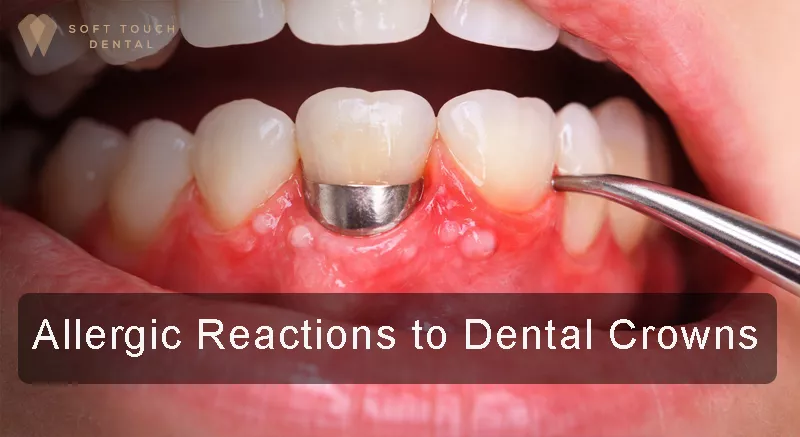
Allergic reactions to dental crowns are uncommon but possible, typically caused by metal alloys (nickel, chromium, cobalt) or dental cements in the crown. Patients may experience gum irritation (redness, swelling, bleeding), oral discomfort or itching, a metallic taste, and occasionally skin rashes or headaches. In severe cases, patients report burning mouth syndrome, ulcers, or widespread dermatitis. To address these issues, dentists use clinical evaluation and allergy testing (e.g. patch tests with nickel sulfate) to confirm the culprit. Treatment involves removing or replacing the offending crown with a hypoallergenic material (such as all-ceramic or zirconia) and managing symptoms (e.g. anti-inflammatory rinses).
Symptoms of an Allergic Reaction to Dental Crowns
An allergic reaction to dental crowns typically starts with localized oral symptoms. The first sign is often gum inflammation around the crown margin redness, swelling, tenderness or even gingival hyperplasia (gum overgrowth). Patients commonly report a burning or itching sensation on the gums or inside the mouth. You may notice pain or tenderness when biting, or a persistent metallic taste in the mouth. Other dental crown allergy symptoms include dryness of the mouth, new-onset ulcers or sores near the crown, and light bleeding of the gums.
Allergic reactions can also cause systemic symptoms that extend beyond the mouth. For example, some patients develop a rash or hives on the face or body or experience headaches and fatigue after having a crown placed. In rare cases, there may be swelling of the lips, tongue, or throat (similar to an allergic reaction to food) that requires immediate attention. It is important to note that these symptoms can also indicate other conditions (such as infection or a poor fit), so it is important to consult with a dentist specializing in Dental Crowns in San Diego for an accurate diagnosis.
Common Dental Crown Allergy Symptoms
These symptoms typically appear within days to weeks after crown placement but can sometimes be delayed (weeks or months) if it’s a slow immune response. Because they overlap with common dental issues, it helps to note if symptoms coincide with a new crown material.
- Gum inflammation and redness: Swollen, tender gum tissue around the crown.
- Pain, burning or itching: Discomfort or prickling sensation in the mouth.
- Metallic taste: A constant weird taste in the mouth, often described as “metallic”.
- Dry mouth or mouth ulcers: Unexplained dryness or new sores in the area of the crown.
- Rash or skin reaction: Red or blistering rash on face, around lips, or body, similar to contact dermatitis.
- Other: Headache, fatigue or other flu-like feelings may occur in conjunction.
Causes of Dental Crown Allergies
Metals in crowns are the most frequent culprits. Many older crowns (and some modern ones) use metal alloys for strength. Nickel, chromium, cobalt, palladium and beryllium are known allergens present in porcelain-fused-to-metal (PFM) crowns, gold alloys, or stainless steel crowns. Nickel allergies are very common in the general population, so even trace nickel can trigger a reaction in sensitive people. Amalgam (silver-mercury) or base-metal crowns also contain metals that may cause local inflammation if you’re allergic.
In contrast, all-ceramic or porcelain crowns have almost no allergy risk when truly metal-free. Zirconia and porcelain are inert ceramics, highly biocompatible materials that rarely provoke immune responses.
Another source of reactions is the dental cement or bonding agents used to attach crowns. These contain acrylic or epoxy resins and other chemicals that can cause a delayed (Type IV) allergic reaction. For example, Benzoyl peroxide and certain monomers in resin cements have been implicated in gum irritation. In summary, anything placed in your mouth crown metal or cement can become an allergen if your body sees it as foreign.
| Crown Material | Composition / Allergen Sources | Allergy Risk & Symptoms | Notes |
|---|---|---|---|
| Porcelain/Ceramic (all-ceramic) | Pure porcelain or ceramic (no metal) | Very low – metal-free, rare reactions | Highly biocompatible; first-choice for metal allergies. |
| Zirconia | Zirconium oxide ceramic (no metal) | Very low – biocompatible, allergy-free | Extremely strong and inert; often used when metal crowns cause issues. |
| Porcelain-Fused-to-Metal (PFM) | Inner metal core (nickel, cobalt, chromium) plus porcelain overlay | Moderate – nickel/cobalt are common allergens | Avoid if known metal sensitivity. |
| Base-Metal Alloy | Nickel-chromium, cobalt-chrome alloys | Higher – nickel allergy common | Strong but many contain nickel; not recommended for allergy-prone. |
| High-Noble Metal (Gold Alloy) | Gold, platinum, palladium (>40% gold) | Low – gold and noble metals rarely allergenic | Biocompatible; less reactive but more expensive. |
| Dental Amalgam | Mercury-silver, tin, copper, zinc, silver | Moderate – mercury and base metals can irritate | Mostly in fillings; some patients report allergies or lichenoid reactions. |
| Resin Cement/Bonding | Acrylates, methacrylates, epoxy compounds | Low to moderate – causes delayed gum reaction | Allergy testing can identify specific monomer sensitivities. |
Diagnosing a Crown Allergy
Diagnosing a dental crown allergy can be challenging because symptoms overlap with common dental problems. The first step is a thorough dental examination and history. Your dentist will check the crown’s fit and look for other causes (decay, infection) while noting your symptoms and medical history. Be sure to inform your dentist about any known metal or chemical allergies.
If a crown allergy is suspected, the dentist may refer you to an allergist for allergy testing. The gold standard is a patch test, where small amounts of suspected allergens (e.g. nickel sulfate, cobalt chloride, dental cements) are applied to the skin under patches. After 48–72 hours, the site is examined for a reaction.
| Diagnostic Method | Description | Use / Notes |
|---|---|---|
| Clinical Examination | Oral exam and patient history (dental checkup) | First step; dentist looks for gum inflammation around crown and asks about allergy history. |
| Patch Testing (Skin) | Skin application of allergens (e.g. Ni sulfate) | Confirms contact allergy to metals or resins; identifies specific allergens. Requires dermatologist or allergist. |
| Allergen Challenge | Intraoral testing (rare) | Exposing gums briefly to material under observation. Not routine. |
| Referral to Allergist | Specialist consult for suspected dental allergy | Allergist may perform patch tests and systemic evaluation. |
| Differential Diagnosis | Rule out other causes (infection, trauma) | Important: similar symptoms can come from decay or ill-fitting crowns. |
Managing and Treating Crown Allergies
The definitive treatment for a definitive allergy to a crown is to remove or replace the problematic crown. After the allergenic material (e.g. metal or resin) has been removed, the immune reaction must resolve. In practice, this means that at Soft Touch Dental the old crown is removed, the tooth is cleaned and a new crown is made with a non-allergenic material. Common choices are all-ceramic or zirconia crowns, or if metals are still needed, a crown made of very noble gold/alloy. These alternative materials have a very low risk of allergy.
Conclusion
allergic reactions to dental crowns are uncommon but worth recognizing. Key symptoms include persistent gum irritation (redness, swelling, burning) and unusual tastes or mucosal changes. These reactions are usually due to metal alloys (especially nickel) or resin cements in the crown. If you experience such symptoms, consult your dentist for evaluation. Diagnosis is often confirmed with skin patch testing or clinical exam. The definitive treatment is to replace the crown with a non-allergenic alternative (ceramic or zirconia). Moving forward, ensuring your dentist knows any metal sensitivities and opting for metal-free crowns can prevent these issues. an allergic reaction to dental crowns is treatable, and taking early action will restore your comfort and oral health.
FAQs
What are common signs that a dental crown is causing an allergic reaction?
Typical signs include persistent gum redness, swelling or pain around the crown; a continuous itchy or burning sensation in your mouth; and an unusual metallic taste. You might also see skin rash near the mouth or have headaches and general fatigue.
How common are allergic reactions to dental crowns?
They are quite rare. Estimates suggest only about 4–5% of patients with metal dental restorations show confirmed allergic mucosal lesions. Most people tolerate crowns well.
Which crown materials are least likely to cause allergies?
All-porcelain or all-ceramic crowns (including zirconia) are the safest, as they contain no metal. These materials are highly biocompatible and very unlikely to trigger a reaction. High-noble gold crowns (rich in gold or platinum) are the next safest metal option, since gold alloys rarely cause allergy. In contrast, avoid crowns with nickel or base metals if you are sensitive.
How are allergic reactions to dental crowns diagnosed?
Diagnosis starts with a dentist’s evaluation of your symptoms and crown fit. For confirmation, an allergy specialist can do patch testing: small samples of metal (e.g. nickel sulfate) or dental cement are applied to the skin to see if a rash develops. This identifies the specific allergen.
What should I do if I suspect I’m allergic to my crown?
First, contact your dentist promptly. They will examine the crown and gums and review your history. If an allergy is suspected, they may refer you for testing. The main solution is to remove and replace the crown with a compatible material.