





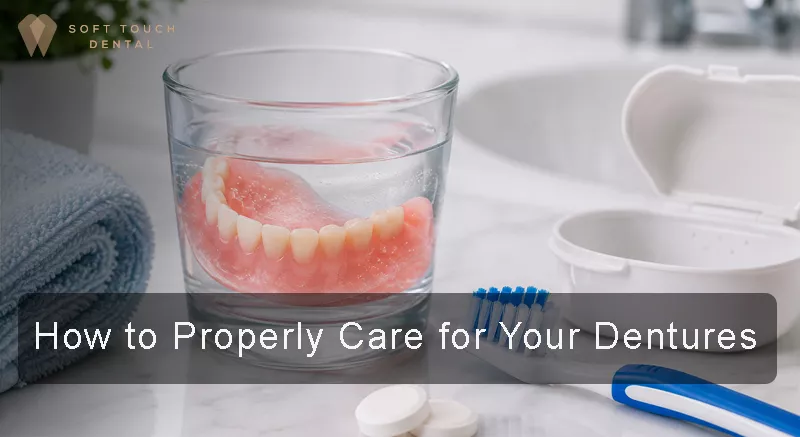
Proper denture care is essential for keeping your dentures clean, comfortable, and long-lasting. Dentures can accumulate plaque, stains, and bacteria just like natural teeth, so they need daily attention. The basic routine includes rinsing and brushing your dentures every day, soaking them in a cleaning solution at night, and handling them gently. These steps help prevent bad odors, infections, and gum irritation.
Daily Denture Cleaning Routine
Rinse Dentures After Meals: Each time you eat, remove your dentures and rinse them thoroughly under warm running water. This washes away loose food particles and debris that could cause irritation or odor.
Brush Dentures Daily: At least once a day (twice is even better), brush your dentures with a soft-bristled denture brush or soft toothbrush. Use an effective, non-abrasive denture cleanser or mild soap with lukewarm water. Avoid regular toothpaste or harsh cleaning products, as they are abrasive and can scratch or damage denture surfaces.
Soak Dentures Overnight: Every night, soak your dentures in lukewarm water or a denture-soaking solution. This keeps them clean, moist, and free of bacteria and plaque that brushing may miss. Make sure the soaking water is not hot (hot water can warp the denture material). After soaking, rinse the dentures well with cool water to remove any remaining cleanser before putting them back in your mouth.
Handling and Maintaining Dentures
- Handle with care: Dentures are fragile and can break if dropped. To prevent any accidental slips, clean them and place them on a soft towel or basin of water. Use both hands when removing or inserting your dentures to prevent them from bending.
- Avoid heat and harsh chemicals: Never use hot or boiling water on your dentures, as the heat will change their shape. Also, avoid household cleaners, bleach, or whitening toothpaste, which can damage the denture material.
- Proper care: When you’re not wearing your dentures (especially overnight), keep them submerged in plain water or a mild denture cleaning solution. This will prevent them from drying out and losing their shape. Storing dentures in a dry place can make them brittle. Always store them in a clean container out of the reach of children and pets.
Oral Hygiene and Denture Maintenance
Clean Your Gums and Mouth: Even without natural teeth, it’s important to maintain good oral hygiene. Every day, gently brush your gums, tongue, and the roof of your mouth with a soft toothbrush. This removes plaque and stimulates blood flow. After brushing, you can rinse your mouth with an alcohol-free mouthwash or warm salt water to keep it fresh and bacteria-free.
Use Denture Adhesive Wisely: If your dentures feel slightly loose, a small amount of denture adhesive (about 3–4 pea-sized dabs per denture) can help them stay in place.. Use only as much as needed and remove the adhesive daily during cleaning. Excess adhesive can trap food and bacteria. If you find yourself relying on adhesive every day, schedule a dental visit – you may need a relining or new dentures for a better fit.
Regular Check-ups: Make a point to see your dentist at least once a year. During these visits, your dentist will inspect your dentures for wear and check that they still fit properly. Over time, changes in your gum and bone structure may require adjustments. At Soft Touch Dental, this is done professionally.
Diet and Hydration: Eat a balanced diet and stay hydrated. Proper nutrition and plenty of fluids help keep your gums healthy. If your mouth feels dry, sip water regularly or talk to your dentist about products for dry mouth. Avoid very hard or sticky foods that can dislodge or damage dentures. Chewing sticky candy or tough meat can loosen dentures or wear them down over time.
When to Replace or Repair Dentures
Even with the best care, dentures eventually wear out or become uncomfortable. See your dentist promptly if you experience:
Persistent Soreness or Irritation
Chronic redness, sores, or inflammation under the denture bases can signal a poor fit or infection. Don’t ignore these, seek adjustment or treatment. Loose or Slipping Dentures: If your dentures frequently feel loose (requiring adhesive to stay in), they may need relining or replacement.
Damaged Dentures
Chips, cracks, or warped areas mean it’s time for professional repair. Never try to adjust or glue dentures yourself.
Significant Wear
As a rule of thumb, consider having your dentures evaluated or replaced every 5–7 years. Materials degrade over time, affecting fit and function. Aging bones and gums can also alter the fit, making old dentures loose or painful.
Difficulty Chewing or Speaking
If your dentures make chewing difficult or speech slurred, check with your dentist. Adjustments can often improve comfort.
Conclusion
Proper denture care starts with a simple daily routine. By rinsing and brushing your dentures each day, soaking them overnight, and handling them gently, you’ll keep them clean, comfortable, and long-lasting. Remember also to clean your gums and mouth daily, and avoid abrasive cleaners or hot water. Regular dental check-ups will catch fit or wear issues early. In summary, caring for your dentures properly involves consistent cleaning, gentle handling, and good oral hygiene habits.
FAQs
How often should I clean my dentures?
You should clean your dentures every day. Ideally, rinse them after each meal to clear food particles, and brush them thoroughly once or twice daily with a soft denture brush and mild cleanser.
Can I sleep with my dentures in?
It’s best to remove your dentures at night. Giving your gums a rest helps prevent soreness and infection.
Is it okay to use regular toothpaste on dentures?
No, regular toothpaste is abrasive and can scratch denture surfaces. Use a cleanser specifically designed for dentures, or a mild soap.
How should I store my dentures when not in use?
Always keep dentures in water or a denture-soaking solution when you’re not wearing them. This keeps them moist and prevents warping. Do not let them dry out on a counter.
What can I do if my dentures feel uncomfortable or loose?
First, check that you’re not using too much or old adhesive. Clean your dentures well and try wearing them without adhesive. If they’re still loose or causing pain, make an appointment with your dentist. You may need an adjustment or relining.
How often should I see a dentist for my dentures?
It’s wise to have a dental check-up at least once a year to assess your dentures and oral health. If you experience any fit issues, pain, or if your dentures are over 5 years old, see your dentist sooner.