



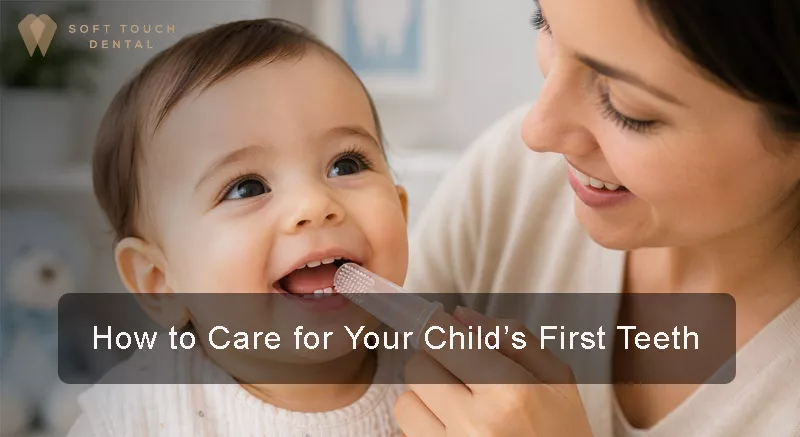
Caring for your child’s first teeth means building healthy dental habits from the very beginning. Start by gently wiping your baby’s gums after each feeding, and as soon as the first tooth erupts (usually around 6 months), clean it with a small, soft-bristled toothbrush. Brush twice a day using a grain-of-rice-sized smear of fluoride toothpaste (at least 1,000 ppm) until age 3. These simple early habits help prevent tooth decay and lay the foundation for lifelong oral health.
Cleaning Your Baby’s Gums and First Teeth
Before the first tooth appears, gently wipe your baby’s gums with a soft, damp cloth after each feeding to remove bacteria and keep the mouth clean. From the eruption of the first tooth until age 3, use a small, soft-bristled toothbrush with a grain-of-rice-sized smear of children’s fluoride toothpaste (at least 1,000 ppm). Although babies and toddlers cannot spit out toothpaste, this very small amount is considered safe and is recommended to help protect their teeth from early decay. These simple daily habits help prevent cavities and build a strong foundation for lifelong oral health.
Brush daily: Brush your baby’s teeth twice a day (morning and night) for about 2 minutes.
Amount of toothpaste: For children under 3 years old, use a grain-of-rice-sized smear of fluoride toothpaste (at least 1,000 ppm). From age 3 to 6, increase the amount to a pea-sized smear.
Supervision: Parents should brush or closely supervise brushing until the child is around 7–8 years old to ensure all tooth surfaces are cleaned properly.
Floss if needed: As soon as two teeth touch, floss between them once a day to remove plaque and trapped food particles.
Avoid giving your child sugary foods and drinks between meals, and never put them to bed with a bottle of milk or juice. Water is the only recommended bedtime drink.
Why are baby teeth important?
Baby teeth play a vital role in your child’s growth and development, helping them chew food properly, develop clear speech, and maintain the space needed for permanent teeth to erupt in the correct position. Premature loss of baby teeth due to decay or injury can reduce this space and increase the risk of crowding or misalignment of the permanent teeth. Keeping baby teeth healthy also helps prevent pain, infection, and difficulties with eating or speaking, giving your child a strong foundation for lifelong oral health.
Making Brushing Part of the Routine
Use a toothbrush with a small head and soft bristles, and clean every surface with gentle circular motions. A two-minute song or timer can turn brushing into something your child looks forward to rather than resists. Replace the toothbrush every three months, or sooner if the bristles start to fray. Between ages 3 and 6, let your child take a more active role in brushing, while you continue to check their work and step in where needed.
Healthy Eating Habits to Prevent Tooth Decay
Nutrition plays an important role in keeping your child’s teeth healthy. Frequent snacking on sugary foods or drinks exposes the teeth to acid attacks throughout the day, increasing the risk of cavities. Offer sugary treats with meals instead of between meals, when saliva can better help protect the teeth.
During the first year of life, breast milk or infant formula is the recommended source of nutrition, while plain cow’s milk can be introduced after 12 months. If your child needs long-term medication, ask your healthcare provider or pharmacist whether a sugar-free alternative is available to help reduce the risk of tooth decay.
Dental Checkups for Babies and Children
Schedule your child’s first dental visit when the first tooth appears, or no later than their first birthday. While your pediatrician monitors your child’s overall health, a pediatric dentist is trained to identify early signs of tooth decay, assess oral development, and provide preventive treatments such as fluoride varnish. Early dental visits also help children become familiar with the dental office, making future appointments more comfortable and less stressful.
Around 6 years of age, the first permanent teeth begin to erupt, and by 12–13 years, most children have their full set of permanent teeth. This is when questions about tooth alignment, spacing, or orthodontic treatment may arise. Until then, the focus should remain on prevention through daily brushing, a healthy diet, and regular dental checkups.
Conclusion
Caring for baby’s first teeth starts with a few simple daily habits: cleaning the teeth twice a day, using the correct amount of children’s fluoride toothpaste, limiting sugary foods and drinks, and scheduling the first dental visit by age 1. By making oral care a positive part of your child’s daily routine, you can help build healthy habits that support strong teeth and good oral health for years to come.
FAQs
When should I start cleaning my baby’s mouth?
Even before teeth appear, wipe your baby’s gums daily with a clean, damp cloth or a soft finger brush. This clears away bacteria left behind by breastmilk or formula and helps your baby get used to the routine early.
How much toothpaste should I use for a baby?
For children under 3, use only a smear — about the size of a grain of rice — of fluoride toothpaste. Once your child turns 3, you can increase to a pea-sized amount.
Is fluoride safe for baby teeth?
Yes. Fluoride strengthens enamel and helps prevent decay. A tiny smear of fluoridated toothpaste on baby teeth is recommended by pediatric dental guidelines.
When should my child first see the dentist?
Plan a visit when the first tooth appears, and by their first birthday at the latest. Early visits — often with a pediatric dentist — help catch problems early and build a positive association with dental care.
How can I ease my baby’s teething pain?
Gently massage the sore gums with a clean finger or a chilled (not frozen) teething ring, and offer firm teethers to chew on. Avoid teething gels or numbing medications unless specifically recommended by your doctor.