





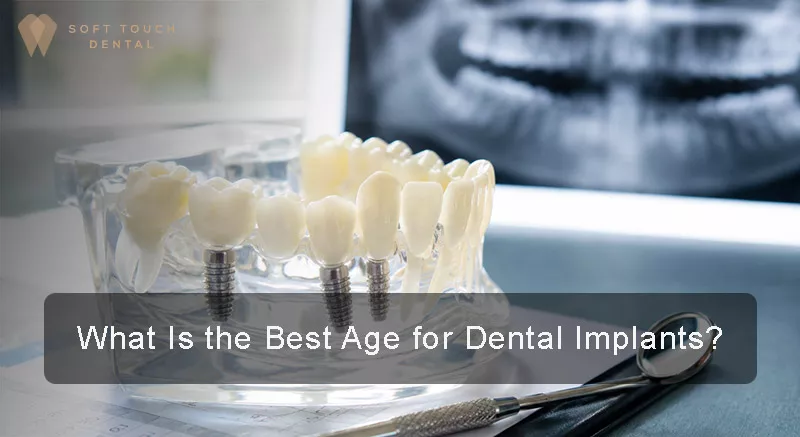
Dental implants can be placed successfully at many different ages. What matters most is not your age itself, but whether your jawbone has finished developing and whether you have enough healthy bone to support the implant. In most cases, dentists recommend waiting until the late teens or early twenties, when jaw growth is complete. After that, adults with good oral and overall health can be excellent candidates for dental implants.
There is no strict age limit for implant treatment. Many healthy adults in their 70s, 80s, and even 90s receive dental implants with excellent long-term results. Rather than focusing on a specific age, dentists evaluate factors such as jaw development, bone quality, medical history, and oral health to determine whether implants are the right choice.
Best Age for Dental Implants
The ideal time to receive dental implants is after the jaw has fully matured. In most people, jaw growth is complete by around 17 to 18 years of age for girls and 20 to 21 years of age for boys. Placing an implant before growth is complete can lead to complications because the surrounding bone is still changing. As the jaw continues to develop, an implant may no longer align properly with the neighboring teeth.
Once jaw growth has stopped, the implant can fuse securely with the bone through a natural process known as osseointegration. This creates a stable foundation that functions much like a natural tooth root. For this reason, many patients become suitable candidates in their late teens or early twenties, provided their jaw has fully developed.
From a clinical perspective, there is no single “perfect” age after growth is complete. Adults in their 30s, 40s, and 50s often have an ideal combination of healthy bone, good healing ability, and fewer complex medical conditions, making treatment more predictable. Younger adults may heal slightly faster because of higher bone density, while some older adults may require additional procedures, such as bone grafting, if bone loss has occurred.
That said, age alone should never be considered a reason to avoid implants. Patients with good overall health, healthy gums, and adequate bone support can achieve excellent outcomes well into their later years. Research has consistently shown implant survival rates above 90%, even among adults over 75 years old. Factors such as bone quality, well-controlled medical conditions, oral hygiene, and lifestyle habits have a much greater impact on success than chronological age.
Minimum Age for Dental Implants
Dental implants are generally not recommended for children or teenagers whose facial growth is still in progress. Most clinicians advise waiting until at least 18 years of age for girls and the early twenties for boys, although the exact timing varies from person to person. Since jaw development can continue into the early twenties, placing an implant too early may result in positioning problems as the surrounding bone continues to grow.
For this reason, dental implants are rarely used in younger patients except in unusual circumstances, such as severe congenital tooth loss or certain traumatic injuries. When a child or teenager loses a permanent tooth, dentists usually recommend temporary solutions such as removable dentures, temporary bridges, or other space-maintaining options until facial growth is complete.
Regular dental examinations, orthodontic assessments, and imaging help determine when jaw development has finished and when implant placement can be performed safely.
Maximum Age for Dental Implants
There is no upper age limit for dental implants. Healthy adults in their 60s, 70s, 80s, and beyond can successfully receive implant treatment if they have sufficient bone support and are medically suitable for the procedure.
As people get older, certain conditions—such as reduced bone density, osteoporosis, diabetes, or cardiovascular disease—may require additional planning before surgery. These factors do not automatically prevent implant treatment, but they should be well managed. In some cases, procedures such as bone grafting may be recommended to improve long-term stability.
Many older adults who have worn removable dentures for years choose dental implants to improve chewing ability, comfort, and confidence. With proper treatment planning, good oral hygiene, and regular follow-up care, implants placed in patients in their 80s or even 90s can achieve success rates comparable to those seen in younger adults.
Types of Dental Implants
Dental implants are available in several forms to accommodate different clinical needs. The most commonly used option is the endosteal implant, which consists of a titanium post placed directly into the jawbone. After the implant integrates with the surrounding bone through osseointegration, it serves as a strong foundation for a dental crown, bridge, or full-arch restoration.
Patients with limited bone volume or unique anatomical conditions may require alternative approaches. Subperiosteal implants, which sit on top of the jawbone beneath the gum tissue, are now used only in select situations and are much less common than they were in the past. Mini dental implants, which have a smaller diameter than conventional implants, can be useful for stabilizing dentures or for patients with limited bone where extensive grafting may not be appropriate.
Each type of implant is designed for a specific clinical situation. The most appropriate option depends on factors such as bone density, oral health, jaw anatomy, and the number and location of missing teeth. Following a comprehensive examination, your dentist or oral surgeon will recommend the treatment approach that best fits your individual needs.
Read more: Types of Dental Implants and How to Choose the Best One
All-on-4 / All-on-X Dental Implants
For patients who have lost most or all of their teeth, full mouth dental implants provide a stable, long-term alternative to traditional removable dentures. One of the most common approaches is the All-on-4 or All-on-X technique, which supports a fixed full-arch restoration using four or more strategically positioned implants. By maximizing the available bone, this treatment can often avoid the need for extensive bone grafting while restoring both function and appearance.
Compared with removable dentures, All-on-4 restorations offer greater stability, improved chewing efficiency, clearer speech, and a more natural feel. Many patients also report increased confidence because their new teeth remain securely in place throughout the day.
Although All-on-4 treatment is more complex and typically costs more than replacing a single missing tooth with an implant, it has an excellent long-term success rate when performed in carefully selected patients with adequate bone support and good overall oral health.
Dental Implant Success and Failure Rates
Dental implants are considered one of the most predictable and successful treatments in modern dentistry. In healthy patients with sufficient bone support and good oral hygiene, long-term success rates generally range from 95% to 98%, making implant failure relatively uncommon.
When failures do occur, they are usually classified as either early or late failures because the causes often differ.
Early implant failure typically occurs during the first few months after placement, before the implant has fully integrated with the jawbone. Possible causes include inadequate bone quality or quantity, infection, surgical complications, excessive pressure on the implant during healing, or smoking, which can interfere with the healing process.
Late implant failure develops months or even years after successful placement. It is most commonly associated with peri-implantitis, an inflammatory condition that causes bone loss around the implant. Other possible causes include excessive biting forces, implant or abutment fractures, or poor long-term maintenance.
Several factors can increase the risk of implant failure, including uncontrolled medical conditions such as diabetes, heavy tobacco use, untreated periodontal disease, poor oral hygiene, and inadequate bone support. Smoking deserves particular attention because it reduces blood flow to the gums and bone, significantly affecting healing and increasing the risk of implant complications. Fortunately, many of these risk factors can be managed before treatment, helping improve the chances of long-term success.
Conclusion
There is no single best age for dental implants. The right time depends on whether jaw development has finished, whether enough healthy bone is present, and whether the patient is medically suitable for the procedure. For most people, treatment begins after the late teens or early twenties, once facial growth is complete.
Beyond that point, adults of almost any age can be successful implant candidates. Whether someone is in their 30s, 60s, or even their 80s, overall health, bone quality, and proper treatment planning matter far more than chronological age. A comprehensive dental evaluation is the best way to determine whether dental implants are the right option and whether additional procedures, such as bone grafting, may be recommended before treatment.
FAQs
Can children or teenagers get dental implants?
In most cases, no. Dental implants are usually postponed until facial and jaw growth is complete. Until then, dentists often recommend temporary solutions such as removable dentures, temporary bridges, or other restorative options to maintain function and appearance.
Is there an upper age limit for dental implants?
No. There is no maximum age for dental implants. Many healthy adults in their 70s, 80s, and even 90s receive implants successfully. As long as a patient is healthy enough for treatment and has adequate bone support, age alone is not a reason to rule out implants.
What are the common types of dental implants?
The most common type is the endosteal implant, which is placed directly into the jawbone. Other options include subperiosteal implants, which are used only in selected cases, mini dental implants for certain clinical situations, and zygomatic implants, which may be recommended for patients with severe upper jaw bone loss.
How often do dental implants fail?
Dental implant failure is uncommon. Most studies report long-term success rates of 95% to 98%, meaning only a small percentage of implants fail. When failure does occur, it is usually related to factors such as infection, inadequate bone integration, smoking, uncontrolled medical conditions, or poor oral hygiene.
What should I do if I am unsure about the timing?
Schedule a consultation with an implant dentist or oral surgeon. They will evaluate your jaw development (when relevant), bone quality, oral health, and medical history before recommending the most appropriate time for treatment. A personalized assessment is the most reliable way to determine whether you are ready for dental implants.