




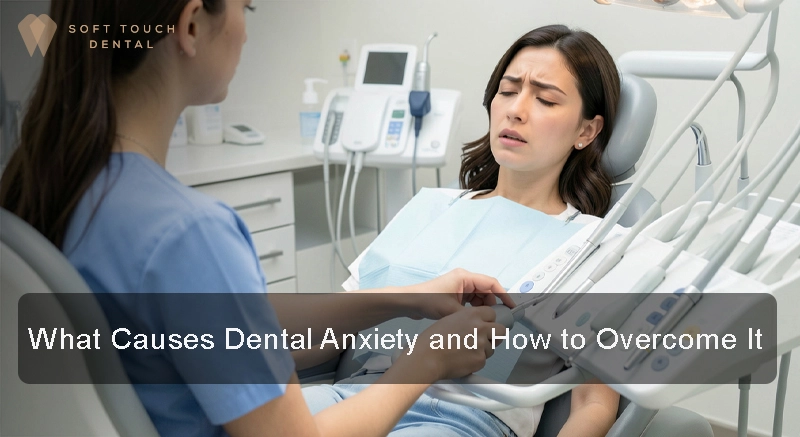
Many people feel dental anxiety or fear of the dentist when thinking about a checkup or treatment. This worry is very common (about 36% of adults report dental fear) and can range from mild nerves to a debilitating phobia. simple strategies like talking to your dentist, practicing relaxation, and using distractions can make visits much easier.
Effective Coping Strategies to Overcome Dental Anxiety
Before and during your dental visit, taking proactive steps can greatly reduce fear and stress. Key strategies include communication, relaxation, distraction, and when needed medical support.
1. Communicate Your Fears
Talk openly with your dentist and dental team about your anxiety. When the staff knows what makes you nervous (pain, needles, loss of control, etc.), they can help. For example, dentists can explain each step of a procedure in advance, answer questions, and even establish a hand signal so you can pause if needed. Sharing past bad experiences and saying what you feel can also help them tailor the visit to your comfort level. In short, being honest about your worries is the first step in managing them.
2. Practice Relaxation and Mindfulness
Relaxation exercises can slow your heart rate and calm your nerves. Deep breathing is one of the easiest tools: take slow, full breaths in through your nose and out through your mouth for several counts. You can practice this in the waiting room or even while reclining in the chair. Other techniques like meditation or progressive muscle relaxation (tensing and then relaxing muscles, toe to head) help release physical tension. Some people find guided imagery helpful—closing your eyes and imagining a peaceful scene (a beach or forest) to distract from the procedure.
3. Use Distractions and Comfort Tools
Shifting focus away from the treatment can dramatically reduce anxiety. Bring headphones with relaxing music or audiobooks, or watch a show if the office allows it. Squeezing a stress ball or holding a small object (like a fidget toy) keeps your hands busy. Even wearing sunglasses or blue-light glasses can dim the bright lights and make you feel more secure. Some offices offer TV screens, VR headsets, or aromatherapy to create a soothing environment.
4. Consider Sedation and Medication
For moderate to severe anxiety, sedation dentistry is an effective option. Nitrous oxide (laughing gas) is a mild sedative inhaled through a mask that leaves you relaxed but awake. Dentists can also prescribe oral sedatives to be taken before the appointment; these medications produce a deeper state of relaxation while still allowing you to respond to instructions. In more extreme cases, options like IV sedation or general anesthesia are available under professional supervision. These methods are safe and commonly used; for instance, many anxious patients successfully complete complex treatments thanks to sedation.
5. Gradual Exposure and Professional Support
If anxiety is very strong, consider gradual exposure and therapy. Some people start by scheduling very simple, non-invasive visits (like a quick exam) to get used to the environment and build confidence. Cognitive Behavioral Therapy (CBT) and exposure therapy (often guided by a psychologist) can also help reframe negative thoughts and slowly desensitize you to dental triggers. Techniques like guided imagery (imagining a calm place) or even hypnotherapy have also helped some patients reduce anxiety. Even acupuncture has been used to relax some patients before treatment.
6. Build Trust with a Gentle Dentist
Finding the right dentist can make a big difference. Look for doctors who specialize in treating anxious patients or who promote fear-free care. A caring dentist will take the time to explain procedures, answer questions, and use gentle techniques. At Soft Touch Dental, you can have a consultation before treatment to see if you feel comfortable.
Understanding Dental Anxiety and Phobia
To tackle dental fear, it helps to know what causes it and how it feels. This understanding can demystify your anxiety and guide the right coping strategies.
Common Causes and Triggers
Dental anxiety and phobia (an extreme form of anxiety) usually stem from a mix of personal factors. Many people trace their fear to a past traumatic dental experience for example, a painful treatment or a negative childhood memory. Others worry about pain or needles; fear of injections (trypanophobia) is a common specific trigger. The loss of control while in the dental chair also unsettles many you have to lie back with your mouth open, unable to see, and often the drill or suction makes unpredictable noises.
Sensory factors like sounds and smells play a big role too. The high-pitched whirr of the drill, the taste of disinfectant, or even the sight of dental instruments can spike anxiety. Some people are afraid of feeling numb (concerned anesthesia won’t work or will cause side effects).
Signs and Symptoms
Dental anxiety can show up in body and mind. You might feel physical symptoms such as a racing heartbeat, sweating, shaking hands, upset stomach, or even nausea just at the thought of the dentist. Emotionally, you may experience intense dread or panic as the appointment approaches. It’s common to have trouble sleeping the night before or to feel jumpy and irritable. Some people report feeling like they have to cancel or postpone appointments behavioral avoidance is a hallmark of anxiety. If these reactions occur repeatedly, it can spiral: missing routine care allows small dental problems to worsen, which in turn makes future visits more anxious. Recognizing these signs is important: acknowledging anxiety is the first step toward addressing it.
Conclusion
Overcoming dental anxiety and phobia is absolutely achievable with the right approach. The most important step is to acknowledge your fear and take action. Start by planning schedule a calm consultation or clean-up visit, and be honest with the staff. Use relaxation techniques (deep breathing, meditation, mindfulness) and distractions (music, stress-relief tools) to keep anxiety at bay during appointments. Always communicate openly with a supportive dentist and consider sedation or therapy if needed. Remember, routine checkups and gentle care build familiarity, which naturally reduces fear over time. Don’t let fear dictate your dental care use these strategies to regain control.
FAQs
1. What is dental phobia and how is it different from ordinary anxiety?
Dental phobia (also called odontophobia) is an intense, excessive fear of dentists or dental work that often leads to avoiding the dentist at all costs. It’s recognized as a specific phobia in medical guidelines.
2. How can I cope with dental anxiety during a visit?
During the visit, practice deep breathing or mindfulness to calm your nerves. Bring distractions (music, audiobooks, stress ball) to keep your mind off the procedure. Agree on a break-signal with the dentist (like raising your hand) in case you need to pause.
3. Are there long-term treatments for dental phobia?
Yes. Beyond in-chair coping, therapies like Cognitive Behavioral Therapy (CBT) and exposure therapy can provide lasting relief. In CBT, you work with a therapist to change fearful thoughts about the dentist and gradually face dental situations in a safe, controlled way. Over time, this rewires your brain’s response to dental triggers. Other options like guided imagery, hypnotherapy, and even acupuncture have helped some patients.
4. What is sedation dentistry and how does it help?
Sedation dentistry uses medication to help patients feel calm or even sleepy during dental procedures. As mentioned, it ranges from mild (nitrous oxide) to deep (oral sedatives, IV sedation) to general anesthesia. The goal is to block the fear and sometimes the pain of treatment.
5. Why should I try to overcome dental anxiety instead of avoiding the dentist?
Avoiding the dentist can cause minor dental issues (like cavities or gum inflammation) to grow into serious problems. Over time, this often means more pain and more complex, costly treatments (root canals, extractions, gum surgery). Early and regular care prevents that cascade. Moreover, repeated avoidance reinforces fear.