




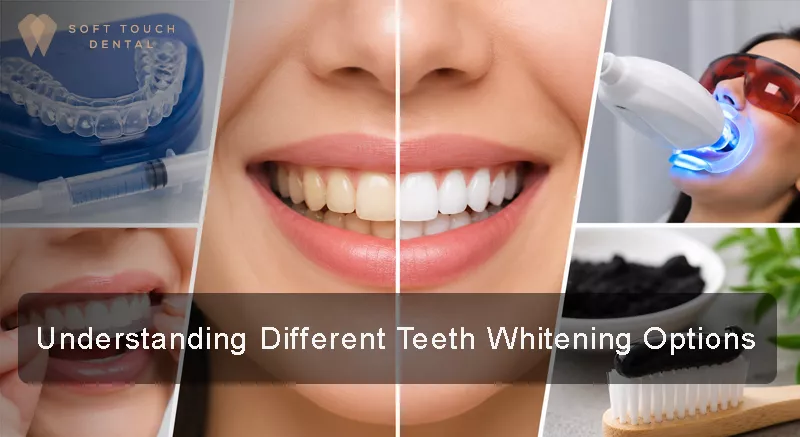
Many people want a brighter smile, and there are a variety of teeth whitening options. These range from everyday over-the-counter products to professional dental treatments. Over-the-counter kits (toothpaste, strips, mouthwash) work by gradually removing surface stains, while dentist-supervised methods (custom trays or in-office whitening) use stronger whitening agents for faster results. Below, Soft Touch Dental explains the main types of whitening methods.
Types of Teeth Whitening Methods
Today, there are several effective teeth whitening methods available, and each option works differently depending on the level of staining, tooth sensitivity, and desired results. Choosing the right type of Teeth Whitening depends on your lifestyle, budget, and dental condition.
Whitening toothpastes and rinses
These contain mild abrasives and low levels of bleaching agents. They scrub away surface stains but do not change your tooth’s natural color. brushing twice daily with whitening toothpaste may take 2–6 weeks of consistent use to see even modest lightening. These products are inexpensive and safe, but expect only subtle results over time.
Whitening mouthwashes often contain a small amount of hydrogen peroxide. They can freshen breath and remove minor stains, but they work much more slowly than other methods. Overall, whitening toothpastes and mouthwashes are better for maintaining an already white smile than for dramatically whitening teeth.
Whitening strips and gels
These over-the-counter kits use thin plastic strips or pens coated with a peroxide-based gel. You place them on clean, dry teeth (usually daily for several weeks) and let the peroxide whiten them. They are usually placed on bare, dry teeth for 10 to 30 minutes daily for several weeks. These products are stronger than toothpaste but gentler than premium dental whiteners.
At-home trays (custom bleaching kits)
Your dentist can provide custom-fit plastic trays and professional-strength gel to use at home. After taking impressions of your teeth, the dentist fabricates snug trays to hold the whitening gel against your teeth. You then place the peroxide gel in the trays and wear them as directed (often for a couple of hours per day or overnight) for up to two weeks. This method uses stronger bleaching agents (e.g. 10–16% carbamide peroxide) than OTC strips, so it can whiten deeper stains. Custom trays are safer and more effective than generic OTC trays because the fit is precise, reducing gum irritation. If left on too long, the peroxide can irritate tooth nerves or gums. Always follow your dentist’s instructions and inform them of any sensitivity.
Professional in-office whitening
This is done at the dentist’s office, usually under the name of chairside bleaching (e.g. Zoom whitening). The dentist applies a high-concentration hydrogen peroxide gel to your teeth and uses lights or lasers to accelerate the process. They also protect your gums with barriers. Because the bleach concentration can be as high as 15–43%, in-office whitening produces quick, dramatic results – often several shades whiter in just 30–60 minutes.
In-office treatment is the fastest method, but it is also the most expensive. Sensitivity or gum irritation can occur, but the dentist takes precautions to minimize these. Overall, professional whitening is very effective and supervised for safety, making it a good choice if you want rapid results and have budget to spare.
Natural and DIY methods (home remedies)
Some people try home remedies like baking soda, coconut oil pulling, or diluted hydrogen peroxide rinses. For example, brushing a paste of baking soda and water a few times per week can gently scrub away surface stains. Swishing coconut oil in the mouth (oil pulling) may reduce plaque, which can make teeth look brighter over time. Similarly, a carefully diluted hydrogen peroxide mouthwash can help bleach teeth (always dilute 3% peroxide with water and use sparingly). These natural methods are low-cost and avoid strong chemicals, but they work very gradually and results vary. Importantly, some trendy “natural” approaches are not proven.
As a rule, avoid over-abrading your teeth: too much baking soda or charcoal can wear enamel. Also, acidic tricks (like lemon juice) are dangerous for enamel and should be avoided.
Preparation Before Whitening
Before using the bleach, brush and floss your teeth to ensure the product comes into contact with clean tooth enamel. Treat any cavities or gum problems first, whitening an untreated cavity can cause pain and sensitivity, and remember that no treatment is permanent. Over time, eating/drinking colored foods (coffee, tea, red wine, berries) will darken your teeth again. To prolong whitening, avoid tobacco and colored beverages, and consider a touch-up or maintenance treatment (such as using a whitening toothpaste) every few months.
Conclusion
There are many teeth whitening options to fit different needs, budgets, and levels of urgency. Gentle options like whitening toothpaste or natural remedies are least expensive and safest but work slowly. Over-the-counter strips and gels are more effective for visible whitening in a few weeks. Dentist-supervised options (custom trays or in-office bleaching) use stronger agents for faster, longer-lasting results. Whichever method you choose, maintain good oral hygiene, avoid foods that re-stain your teeth, and consult your dentist to ensure the treatment is safe for your teeth and gums.
FAQs
How white will my teeth stay after whitening?
Teeth whitening is not permanent. Over time, all teeth become stained again from food, drink, and aging. In general, the results of in-office or custom trays can last about 1 to 2 years if you maintain good habits. Follow-up treatments (such as occasional strips or a home gel) are usually needed. Brushing, flossing, and avoiding heavy stains (coffee, wine, tobacco) help teeth stay whiter.
Which method whitens teeth faster?
Professional in-office bleaching is faster. It can whiten multiple shades in one 30- to 60-minute session. Custom trays used at home are next in line: You may see significant improvement after 1 to 2 weeks of nightly wear. Over-the-counter strips take longer to work (often up to 2 weeks of daily use), and whitening toothpastes or mouthwashes work more gradually (over weeks or months).
Are whitening toothpastes or strips safe?
Yes, when used as directed. Over-the-counter whitening toothpastes and strips are monitored and are generally safe for healthy teeth. Follow product instructions exactly. Do not leave the whitening product on your teeth for longer than recommended. If you have sensitive teeth or gum problems, start with a milder option (like toothpaste) or talk to your dentist first.
Will whitening products damage my gums or tooth enamel?
Tooth sensitivity and gum irritation can occur, especially with strong whiteners. Some sensitivity is normal and often temporary. Overuse of products (such as leaving strips on your teeth for long periods of time) can damage your enamel or gums. To minimize the risk, use only approved products and follow the instructions. The fluoride or potassium nitrate in some kits can reduce sensitivity. If you have cavities or gum disease, always see your dentist before whitening your teeth. Untreated dental problems can make whitening painful and should be addressed first.
Are natural remedies effective?
Natural methods can only help lighten superficial, minor stains. Brushing with baking soda or rubbing oil may lighten your teeth slightly over time. However, these methods cannot reach deep stains like peroxide. They are safe to try sometimes, but their results are subtle. If you need a dramatic change, you will likely need a whitening product or dental treatment.