





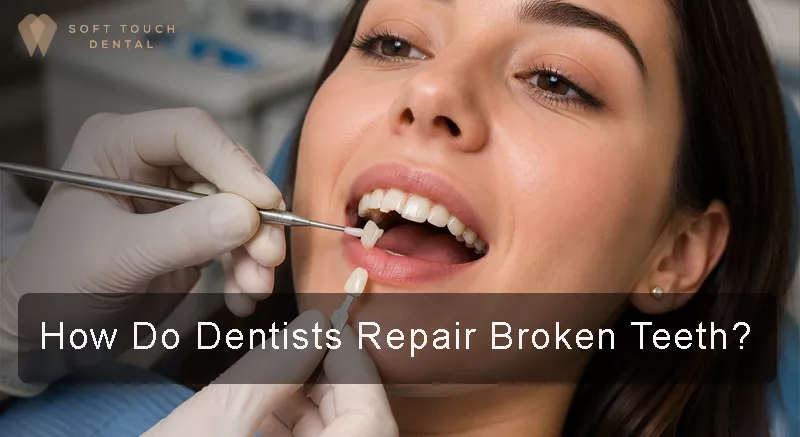
A broken or chipped tooth can usually be fixed with dental treatment. How dentists repair broken teeth depends on the size and location of the break. For example, very small chips often need only smoothing or a quick composite bonding, whereas larger breaks may require a crown or filling to rebuild the tooth. If the crack reaches the tooth’s nerve, a root canal is typically done before placing a crown.
Common Treatments for Broken Teeth
Dentists have several ways to restore a broken tooth, based on how much tooth structure is lost. Common repair options include:
Enamel polishing and bonding:
For minor chips or cracks, the dentist can smooth rough edges and apply a tooth-colored composite resin to reshape the tooth. This composite bonding is done in a single visit and often requires no anesthesia.
Dental veneers
For slightly larger chips (especially on front teeth), a custom-made veneer (porcelain or composite) can be bonded to cover the broken area and improve appearance. Veneers cover only the front surface of the tooth and are made to match your natural tooth color. Note that dental veneers usually require two appointments (one to prepare the tooth and one to bond the final veneer).
Fillings and crowns
Moderate breaks that expose more tooth often need a filling or crown. A crown (cap) covers the entire visible portion of the tooth, protecting and reinforcing it. Fillings or crowns restore the tooth’s shape and function, and can look very natural when matched to your other teeth. Crowns are a common solution for broken teeth and provide a durable, long-lasting restoration.
Root canal treatment
If the fracture is deep enough to expose or damage the pulp (tooth nerve), the dentist will perform a root canal first. This involves removing the inflamed or infected nerve tissue, cleaning the tooth interior, and sealing it. After a root canal, a crown is typically placed over the tooth to protect it from further fracture.
Extraction and replacement
In severe cases where the tooth is split or broken below the gum line, it may not be salvageable. The dentist will then extract the tooth and recommend a replacement option. Of the replacement methods, dental implants are often the best choice—they look, feel and function like natural teeth. Bridges or dentures are alternatives, but implants preserve bone and oral function the best.
Immediate Steps After a Tooth Break
If you break a tooth, quick action can improve outcomes. First, gently rinse your mouth with warm water to remove debris and clean the area so you can better assess the damage. If there is any bleeding, apply gentle pressure using clean gauze and use a cold compress on your cheek to reduce swelling. If a piece of the tooth has broken off, save it and bring it to the dentist, keeping it moist in milk or saliva if possible, as it may help with reattachment. To protect your mouth from sharp edges, cover the broken area with sugar-free chewing gum or dental wax, and avoid chewing on that side by sticking to soft foods and lukewarm liquids. Veneers Fix Gaps Between Teeth can also be an option your dentist may discuss later for improving the appearance and function of damaged or uneven teeth. Finally, contact your dentist as soon as possible, even if there is no pain, to prevent infection or further complications.
What to Expect During a Broken Tooth Repair
Repair procedures vary in length and comfort level:
Time in the chair: Simple repairs like bonding or small fillings often take less than an hour and may not require anesthesia. Smoothing a chip is very quick (“minutes” as one dentist notes). More extensive work (crowns, veneers, root canals) can require multiple visits. For instance, placing a porcelain veneer usually involves two appointments.
Anesthesia: For very minor fixes, sometimes no numbing is needed. However, if drilling or a root canal is involved, the dentist will use local anesthesia so you won’t feel pain during the procedure. You may feel some pressure or vibration, but it should not be painful.
After the repair: You might notice some sensitivity to hot or cold for a day or two after treatment, especially if drilling was involved. This is normal. Your dentist may recommend avoiding very hard or chewy foods on that tooth for a short time. Follow all aftercare instructions (such as how to clean around a temporary crown) to ensure healing. Over-the-counter pain relievers and gentle brushing will help keep discomfort minimal.
Longevity of repair: Composite bonding and fillings can stain or wear over time, while crowns and veneers generally last longer if cared for. Good oral hygiene and regular dental check-ups will help your repaired tooth last. If ever you notice any looseness, pain, or change, contact your dentist.
Conclusion
Broken teeth can be alarming, but dentists have many ways to fix them. The right method depends on the break: minor chips often only need smoothing or bonding, while larger fractures may require crowns or root canals. Acting quickly helps save the tooth. If you ever break a tooth, rinse and protect it, then contact your dentist immediately. With prompt professional care, your tooth can often be restored back to normal function and appearance.
Frequently Asked Questions
What should I do if I break my tooth?
First rinse your mouth with warm water to clean it. Save any broken-off pieces of tooth. Cover sharp edges with sugar-free gum or dental wax to protect your cheek or tongue. Avoid chewing on that side and contact your dentist right away for an evaluation.
Is a broken tooth a dental emergency?
It can be. A broken tooth is an emergency if you have severe pain, bleeding, or a large part of the tooth is missing. If the fracture is minor with no major pain, it may not require immediate ER care, but you should still see a dentist as soon as possible to prevent complications.
Can a broken tooth heal on its own?
No. Unlike bone, tooth enamel and dentin cannot self-repair once broken. A broken tooth requires professional treatment to restore it and protect against infection. Leaving even a small crack untreated can lead to pain or infection later.
Will repairing a broken tooth hurt?
Most repairs cause little pain. Dentists numb the area when needed, so you typically only feel pressure, not sharp pain. For very small chips, the procedure can even be done without anesthesia. You may have mild sensitivity afterward, but this usually subsides quickly with over-the-counter pain relief.