





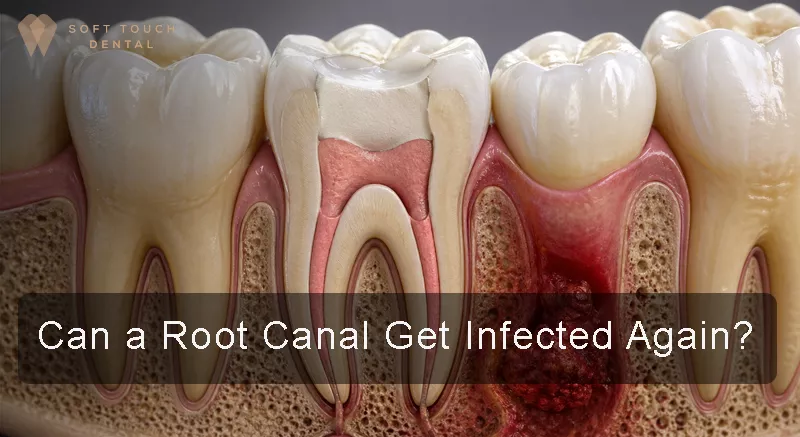
A root canal is designed to remove infection and save a damaged tooth, but many patients wonder: can a root canal get infected again? In short, yes – although it’s uncommon. Modern studies show root canal therapy succeeds in about 86–98% of cases, meaning a small number of treated teeth eventually develop new infection.
While root canals usually work, they aren’t 100% foolproof. If any bacteria remain or re-enter the tooth after treatment, an infection can return. For example, Colgate notes that missing a tiny canal or delaying the permanent crown can leave a pathway for bacteria to invade the Root Canal filling. In plain terms, root canal infection after procedure means that bacteria have survived the initial cleaning or found a way back in.
Common causes of root canal reinfection
Even a well-done root canal can fail later if conditions change. Common reasons a treated tooth may get infected again include:
Missed or Complex Canals: Some teeth have tiny or curved canals that are hard to clean completely. If bacteria hide in these spots, they can cause a new infection later.
Delayed or Leaky Restoration: If the permanent crown or filling is delayed (or if the seal fails), saliva bacteria can seep into the canals. Colgate warns that a “delay in placing the permanent restoration” greatly increases reinfection risk.
New Tooth Decay: A new cavity on or near the treated tooth can expose the root filling to bacteria. Even after root canal therapy, a decayed margin can let infection back in.
Cracked Tooth or Trauma: Any crack, chip or injury to the tooth’s root after treatment creates a gateway for bacteria. For example, biting hard or an accident can crack the tooth and allow reinfection.
These factors essentially give bacteria a way back into a tooth that was once sealed off. When reinfection happens, the tooth’s pulp tissue (which was removed) can become inflamed or abscessed again.
Symptoms of a Reinfected Root Canal
Watch for warning signs similar to the original infection. Symptoms that may indicate a root canal is infected again include:
- Persistent or Severe Pain: Pain that lingers or worsens, especially when biting or tapping the tooth, can signal reinfection. Colgate notes sharp pain on biting or constant pressure as key symptoms.
- Sensitivity to Hot/Cold: If the tooth becomes unusually sensitive to hot or cold foods and drinks, this may mean bacteria are irritating the nerve remnants.
- Swollen or Tender Gums: Gum swelling or a “pimple” (gum boil) near the tooth often means an abscess is draining infection. Any gum bump or redness warrants a dental check.
- Tooth Discoloration: A treated tooth that turns gray, brown or yellow can signal internal necrosis or infection inside the canal.
- Bad Taste or Odor: Chronic bad breath or a bitter taste that doesn’t go away with brushing can accompany a failed root canal.
- Other Signs: Less commonly, unexplained fatigue or even fever might occur if the infection is spreading systemically.
How soon can a root canal reinfection occur?
There’s no fixed timeline. Some infections become apparent within days or weeks (often if the original infection wasn’t fully removed). Others can take months or even years to surface. In fact, Crossroads Dental reports most post-root-canal infections appear within about two weeks, but a tooth can also become reinfected years later if new decay develops that exposes the sealed root. Regular dental check-ups and X-rays help catch reinfection early, even long after the initial treatment.
Treating and Preventing Root Canal Re-Infection
If a tooth root infection recurs, your dentist or endodontist will evaluate treatment options. In many cases, endodontic re-treatment is recommended. This involves reopening the tooth, removing the old filling, cleaning and disinfecting the canals again, and then refilling them with new filling materials. Re-treatment is often done in one appointment and is usually relieved by clearing the infection. Sedation can be used for patient comfort, and most people report no more pain than the initial procedure.
In some cases, an apicoectomy (surgical root tip removal) or, rarely, extraction may be advised, but saving the natural tooth is typically the goal. The good news is that most infected root canals can be successfully retreated, restoring your oral health.
Preventing Re-Infection of Root Canals
To prevent re-infection after root canal treatment, it is essential to maintain excellent oral hygiene and follow the aftercare instructions. Soft Touch Dental Clinic emphasizes personalized follow-up care and uses modern techniques to ensure the long-term success of root canal treatment. Choosing an experienced dentist and adhering to the necessary aftercare can make a big difference in protecting your treated tooth from further complications:
- Complete Restorations Promptly: Have your permanent crown or filling placed as soon as recommended. A good seal is crucial. Even a short delay or a damaged temporary filling can let bacteria in.
- Maintain Good Oral Hygiene: Brush twice and floss daily to prevent new cavities. Colgate cautions that poor hygiene can lead to new decay around the treated tooth.
- Regular Dental Check-Ups: Visit your dentist for routine exams and cleanings. They can spot new problems (like cracks or decay) early.
- Avoid Hard Biting: Don’t chew ice or very hard foods on that tooth, as stress can crack restorations and let in bacteria.
- Follow Dentist’s Instructions: Keep any follow-up appointments, finish any prescribed antibiotics, and alert your dentist if you feel symptoms.
Conclusion
A root canal-treated tooth can become infected again, but this is relatively uncommon. When reinfection occurs, it’s usually because bacteria survived the first treatment or gained entry through a new crack, decay, or leak. The key is to recognize warning signs – pain, swelling, or a gum boil and see your dentist. Most reinfected canals can be successfully retreated. Maintain good oral hygiene, avoid delays in restorations, and keep up regular dental visits to minimize your risk. If you suspect an infection, don’t wait: early diagnosis and care can save your tooth.
FAQs
How can I tell if my root canal is failing?
Signs include new or recurring pain, swelling, or a gum bump near the treated tooth. Lingering sensitivity and tooth discoloration are also red flags. If symptoms appear a week or two after treatment, it likely means infection remains. See a dentist for X-rays and examination – only they can confirm a failed canal.
How long after a root canal can infection occur?
There’s no fixed timeframe. Infections sometimes surface within days or weeks if bacteria were missed, and sometimes months or years later due to new decay. Most occur within the first two weeks, but late reinfections do happen. Regular check-ups help catch problems early.
What should I do if my root canal gets infected again?
Contact your dentist promptly. The usual treatment is endodontic retreatment: the tooth is reopened, the canals are cleaned again, and the tooth is resealed. Early retreatment has high success. If left untreated, the infection won’t heal on its own and can spread, causing worse complications.
Can a root canal infection spread to other parts of my mouth or body?
Yes. If not treated, the bacteria can spread through tissues and even into the bloodstream. It can affect neighboring teeth, gums, or jaw bone. In extreme cases, serious systemic infection can occur. That’s why prompt dental care is essential when an infection is suspected.
Is retreatment painful or risky?
Retreatment is generally no more painful than the original root canal, since anesthesia is used. Many patients say it feels similar to the first procedure, and they often experience relief once the infection is cleared. Your dentist can also offer sedation or pain management if needed.