





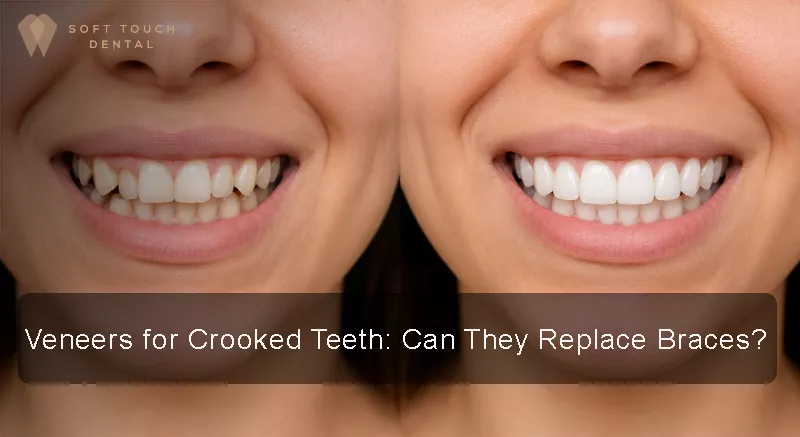
Veneers are thin, tooth-colored shells bonded to the front of teeth to hide cosmetic flaws. For crooked teeth, veneers can make mild misalignments look straighter, but they don’t actually move teeth or fix severe bite problems. In other words, veneers can improve the appearance of slightly crooked or uneven teeth, but they cannot truly replace braces for most orthodontic corrections.
Can Veneers Fix Crooked Teeth?
ِDental Veneers do not actually straighten teeth; they only cover imperfections to create the illusion of alignment. veneers can make crooked teeth look straight, but they don’t actually move the teeth into a new position like braces or clear aligners do. In practice, veneers are a cosmetic solution: they mask minor rotation, small gaps or unevenness by reshaping the visible surfaces of teeth. This means veneers work best for mild cosmetic issues (e.g. a tooth that is slightly turned or a small gap) rather than true orthodontic problems. If your bite alignment or chewing function is affected by crooked teeth, orthodontic treatment (braces or aligners) is the recommended approach.
Even so, in suitable cases veneers can give an instant orthodontic effect. For example, veneers can cover up small gaps and slight crookedness, giving the illusion of a perfectly straight smile. Patients with minor overlap or one turned tooth can often get a straighter-looking smile in just a couple of visits, instead of months in braces.
How Veneers Work on Crooked Teeth
Veneers are custom-made shells (porcelain or composite) that bond to your front teeth. They change the visible shape, size, and color of the tooth surface. In effect, a veneer can be made slightly wider, longer, or reshaped to compensate for a crooked tooth. For example, a tooth that is slightly turned can be covered with a veneer sculpted to face forward, masking the rotation. Mild gaps or chips can similarly be covered by reshaping the teeth with veneers. Veneers fix gaps between teeth by improving the visible shape and spacing of the smile, so the whole smile looks aligned and even.
If your front teeth are slightly crooked or crowded, veneers can often cover these problems almost immediately. veneers are ideal for slightly crooked or crowded teeth, and can instantly change the color, shape, size, and even the appearance of the teeth. Conversely, if the teeth are severely rotated or have a poor bite, veneers will need to be made very thick on one side or will worsen their alignment, so orthodontics is usually done first in these cases.
The Veneer Procedure for Crooked Teeth
The veneer procedure for crooked teeth is designed to improve the appearance of minor misalignment while creating a natural-looking smile. Depending on the type of veneers used and the condition of your teeth, treatment may take anywhere from one to several dental visits. Getting veneers usually involves these steps:
Consultation and Planning
Your dentist will examine your teeth, take X-rays or scans, and discuss your smile goals. They may take photos or digital impressions. This is when you explain the crooked teeth you want fixed, and the dentist will decide if veneers alone can achieve that look. If any cavities, gum disease, or grinding habits exist, those must be treated first.
Preparation
For porcelain veneers, a thin layer of enamel is buffed off each tooth (often 0.3–0.7mm) to make room. This step is not reversible: treatment is not reversible because tooth enamel is removed to place a veneer. The dentist takes new impressions or scans after prep. A temporary veneer may be placed while the lab crafts the permanent one. For composite veneers, less enamel is removed; the resin is applied directly without a lab in one visit.
Veneer Fabrication
If using porcelain, the impressions go to a dental lab. A technician creates each thin shell to precisely match your teeth in shape and color. This custom design is key to making crooked teeth look aligned.
Bonding
At the final visit, the dentist fits the veneers to check size and color, makes any minor adjustments, then permanently bonds them with special adhesive. They will polish and finish to ensure the bite feels right.
Benefits of Veneers for Crooked Teeth
When used appropriately, veneers offer some distinct advantages over braces:
- Immediate Transformation: Veneers whiten, reshape, and straighten simultaneously. Many patients get a new smile in weeks, not years.
- Aesthetic Enhancement: Veneers can fix multiple issues at once. They cover discoloration, chips, worn edges and slight misalignment.
- Durability: High-quality porcelain veneers, in particular, can last a long time. With good oral care, they often remain intact for 10–15 years or more. (Composite lasts less, often 5–7 years.) This longevity means you get sustained benefits before replacement is needed.
- Minimally Invasive Look: Although enamel is removed, the removal is often minimal (especially with veneers designed to be ultra-thin). veneers can require only minimal enamel removal, preserving your natural teeth. Unlike braces, there are no metal wires or rubber bands, which some patients prefer for appearance reasons.
Conclusion
Veneers for crooked teeth can dramatically improve the appearance of a slightly uneven smile, but they are not a substitute for braces in correcting serious misalignment problems. Veneers cover and reshape teeth, creating a straighter appearance without the need for orthodontics. However, for severe bite problems or crowding, clear braces or aligners are necessary to truly straighten teeth and protect your oral health. Veneers offer a quick and beautiful smile makeover. But for the healthiest and most lasting results in severely crooked teeth, orthodontic treatment should be a priority.
FAQs
Can veneers replace braces for crooked teeth?
Only in very mild cases. Veneers can make slightly crooked teeth look straight, but they do not move teeth. They are a quick cosmetic solution for small misalignments. If your crooked teeth affect your bite or are severe, braces or aligners are the proper treatment.
Who is a good candidate for veneers instead of braces?
Good candidates have mild cosmetic issues (small rotations, gaps, or uneven teeth) and healthy teeth/gums. They must be okay with removing some enamel (since veneers are permanent).
How long do veneers last compared to braces?
Porcelain veneers last about 10–15 years (some up to 20). Composite lasts ~5–7 years. Braces/aligners can last a lifetime once teeth are properly positioned (if retainers are worn). You will eventually need to replace veneers, whereas braces are a one-time treatment (aside from retainers).
Do veneers damage my natural teeth?
Veneers require removing a small amount of enamel, which is permanent. This can cause sensitivity. Over time, veneers can also stress teeth if your bite is uneven. However, when placed by an experienced dentist, the risks are minimized. Always discuss these concerns with your dentist beforehand.
Are veneers worth it for crooked teeth?
Veneers are worth it if your goal is a quick, cosmetic fix for minor crookedness and you understand the costs and maintenance. They deliver an immediate, brilliant smile. But if you need actual tooth movement or have significant bite issues, orthodontics is the healthier long-term solution.