





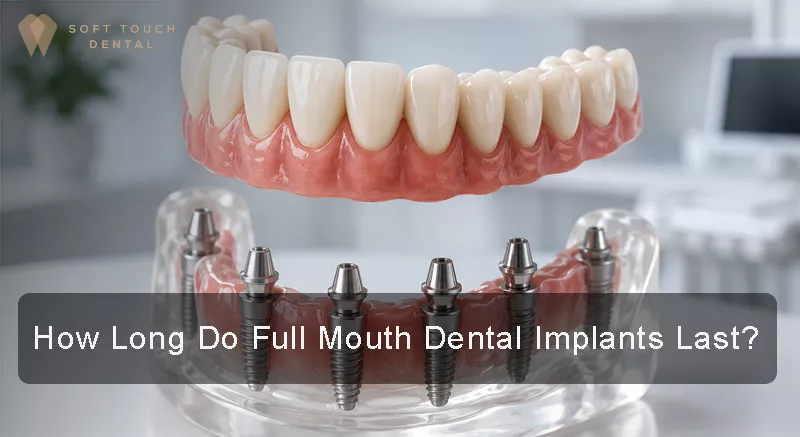
If you are wondering how long do full mouth implants last, the short answer is: most full mouth dental implants can last 20 years or more, and in many cases, they may last a lifetime with proper care. However, the lifespan depends on several factors, including oral hygiene, bone health, smoking habits, and the quality of the implant procedure.
What Is the Lifespan of Full Mouth Dental Implants?
Most full mouth dental implants are designed to be a long-term or permanent tooth replacement solution. The titanium implant posts placed inside the jawbone can often last 25 years or longer. In many patients, they never need replacement.
However, the prosthetic teeth attached to the implants may wear out sooner. Depending on the material used, the bridge or denture may need replacement after 10–20 years.
| Implant Component | Average Lifespan |
|---|---|
| Titanium implant posts | 20–30+ years |
| Implant bridge | 10–20 years |
| Zirconia restoration | 15–20+ years |
| Acrylic prosthetic teeth | 5–10 years |
What Affects the Lifespan of Full Mouth Implants?
Several factors influence the full mouth dental implant lifespan. Some patients enjoy decades of success, while others may experience complications earlier.
1. Oral Hygiene Habits
Just because implants are artificial does not mean they are maintenance-free. Poor oral hygiene can lead to gum inflammation and peri-implantitis, a condition similar to gum disease that may cause implant failure. To protect your implants:
- Brush twice daily
- Floss or use a water flosser
- Attend regular dental cleanings
- Avoid plaque buildup around implants
2. Smoking
Smoking is one of the biggest reasons dental implants fail prematurely. It reduces blood flow to the gums and slows healing after surgery. Patients who smoke heavily usually experience:
- Higher infection risk
- Increased bone loss
- Lower implant success rates
3. Bone Quality and Density
Strong jawbone support is essential for implant stability. Patients with severe bone loss may require bone grafting before full mouth implants.
4. Bite Pressure and Teeth Grinding
Grinding your teeth at night can place excessive stress on implants and restorations. Over time, this may crack prosthetic teeth or loosen components.
5. Quality of Materials and Dentist Experience
Not all implants and restorations are equal. Premium materials such as zirconia or high-quality titanium often last longer.
Can Full Mouth Implants Last a Lifetime?
Full mouth dental implants are built to be a long-term solution, not a temporary fix. In most cases, the titanium implant posts fused to the jawbone can last 20 years or even a lifetime when properly maintained. What many patients don’t realize is that the visible teeth attached to the implants may wear down faster than the implants themselves due to daily chewing pressure and normal aging. Factors such as smoking, poor oral hygiene, uncontrolled diabetes, and teeth grinding can shorten the lifespan of implants significantly. On the other hand, patients who brush and floss consistently, visit their dentist regularly, and avoid harmful habits often keep their implants stable for decades without major complications.
Full Mouth Implants vs Dentures: Which Lasts Longer?
Traditional dentures typically need replacement every 5–8 years because they loosen as the jawbone changes shape. Full mouth implants generally last much longer because they are anchored directly into the jawbone.
| Feature | Full Mouth Implants | Traditional Dentures |
|---|---|---|
| Lifespan | 20+ years | 5–8 years |
| Bone preservation | Yes | No |
| Stability | Excellent | Moderate |
| Maintenance | Moderate | Moderate |
| Comfort | High | Variable |
Signs Your Full Mouth Implants May Need Attention
Even though full mouth dental implants are known for their long lifespan, they still require regular monitoring to stay healthy and functional. Small warning signs such as bleeding around the gums, constant bad breath, mild swelling, or discomfort while chewing should never be ignored, because they may indicate infection, bone loss, or excessive pressure on the implants. In some cases, patients also notice looseness in the implant bridge or tiny cracks in the prosthetic teeth after years of use. The good news is that most implant-related problems can be treated successfully when detected early.
Conclusion
how long do full mouth implants last? In most cases, the implant posts can last 20 years or more and sometimes even a lifetime with proper care. The visible restoration may eventually need replacement, but good oral hygiene, regular dental visits, and healthy habits can significantly extend the full mouth dental implant lifespan.
FAQs
Do full mouth implants last forever?
The implant posts can potentially last a lifetime, but the prosthetic teeth may eventually need replacement due to normal wear.
How often do full mouth implants fail?
Dental implants have a high success rate — often above 95% when properly maintained.
Can full mouth implants be replaced?
Yes. If the prosthetic bridge wears out, dentists can replace it without removing the implant posts.
Are zirconia full mouth implants better?
Zirconia restorations are highly durable, stain-resistant, and aesthetically pleasing. Many patients prefer them for long-term use.
What is the biggest cause of implant failure?
Poor oral hygiene and smoking are among the most common causes of implant complications and failure.
For patients replacing a full arch, our same-day dental implants in San Diego restore function and appearance in one appointment.