





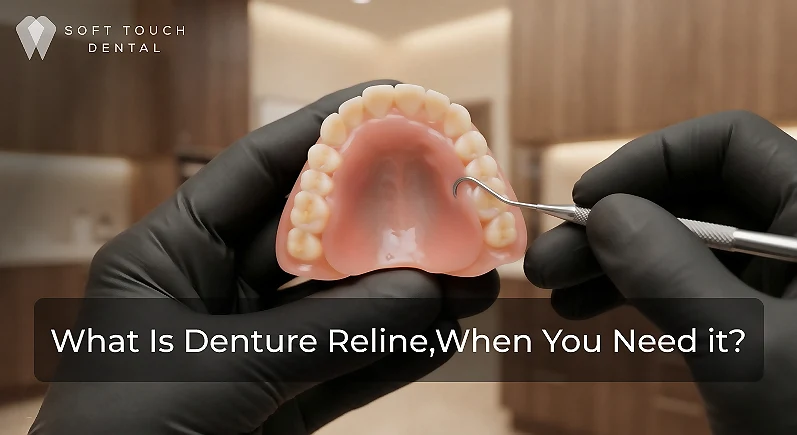
A denture reline is when a dentist resurfaces the inside of an existing denture, the part that touches your gums, so it fits snugly again after your gum and jawbone shape has changed. It doesn’t replace the denture itself, just refits it. Most dentures need a reline every one to two years.
What Exactly Happens During a Denture Reline?
During a reline, your dentist removes a thin layer of material from the inside surface of your denture, or adds new material, to match the current shape of your gums. In many cases this is done chairside in a single visit: an impression material is placed inside the denture while it’s in your mouth, capturing the exact current contour of your gum ridge, and the denture is then adjusted based on that impression. More involved relines may be sent to a dental lab and take a day or two to complete.
Either way, the goal is the same: restore the tight, custom fit your denture had when it was new, without having to remake the entire appliance from scratch.
Why Do Dentures Stop Fitting Properly Over Time?
Dentures rest directly on your gums and the jawbone underneath them, and that jawbone doesn’t stay the same shape forever. Once teeth are gone, the bone that used to support them gradually resorbs, or shrinks, because it’s no longer receiving the stimulation that chewing with natural tooth roots provided. This process is often fastest in the first year after tooth loss or extraction, then continues more slowly for years afterward.
As the underlying bone and gum ridge shrink, the base of your denture, molded to fit the shape your mouth was when it was made, gradually stops matching your actual gum contour. The result is a denture that rocks, traps food, or feels loose, even though nothing is technically broken.
What Are the Signs You Need a Reline?
The most common signs are a denture that feels loose or shifts while eating or talking, sore spots or irritation that weren’t there before, needing more and more denture adhesive just to keep it in place, or noticing your bite or facial appearance has changed slightly. Clicking noises while chewing, food getting trapped underneath the denture more often than it used to, and gum soreness by the end of the day are all worth mentioning to your dentist as well.
None of these symptoms mean anything is wrong with the denture itself. They’re simply signs that your mouth has changed shape since it was made, which is completely normal and expected.
How Often Should Dentures Be Relined?
As a general guideline, the American College of Prosthodontists notes that most dentures benefit from a reline every one to two years, though this varies by patient. Bone and gum changes tend to be more rapid in the first year after getting a new denture, especially after an immediate or same-day denture, so a first reline is often needed sooner, sometimes within the first six months to a year. After that, the pace of change typically slows, and relines become less frequent.
Rather than following a strict calendar, most dentists recommend relying on both a regular checkup schedule and how the denture actually feels. If it starts to feel loose or uncomfortable, that’s the real signal, regardless of exactly how much time has passed.
What’s the Difference Between a Soft Reline and a Hard Reline?
A hard reline uses a rigid acrylic material, similar to what the denture base is already made from, and is meant to last as long as the denture itself. It’s the more common, longer-term option for most patients. A soft reline uses a cushioned, flexible material instead, which absorbs more pressure and is often used for patients with sensitive gums, thinner gum tissue, or sore spots that a hard reline would aggravate.
Soft relines tend to wear out faster than hard relines and may need to be redone more often, so your dentist will typically recommend whichever type best balances comfort and durability for your specific gum tissue.
Is a Reline the Same as Getting a New Denture?
No. A reline refits your existing denture’s base to your current gum shape, but keeps the same teeth, same bite, and same overall denture. A new denture is a completely new appliance, usually needed when the teeth themselves are worn down, the denture is cracked or damaged, or so many relines have already been done that there isn’t enough material left to adjust further.
As a rough guideline, most dentures last 5 to 10 years with proper care and periodic relines before a full replacement becomes the more practical option. Your dentist can tell you during a checkup whether a reline will solve the problem or whether it’s time to consider a new denture.
The Bottom Line
A loose or uncomfortable denture almost never means something has gone wrong. It usually just means your gums have changed shape since it was made, which a reline can typically fix in a single visit. If your denture has started feeling loose, sore, or harder to keep in place, schedule a checkup so we can tell you whether a reline, an adjustment, or a new denture makes the most sense.
For day-to-day care between visits, see our guide on how to properly care for your dentures, and if you’re considering a more permanent, non-removable option, learn about implant-supported dentures.
Learn more about dentures in San Diego and ongoing care.