
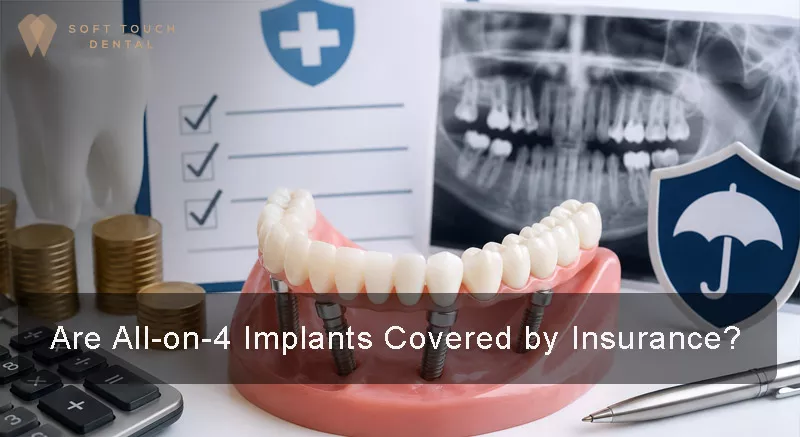
All-on-4 dental implants are a popular full-arch solution often marketed as teeth in a day. However, the short answer to the question “all on 4 covered by insurance” is usually no. Most dental plans classify All-on-4 implants as elective or cosmetic, meaning insurers cover only a small part of the cost. insurance may pay for preparatory work (like X‑rays, exams, extractions, or bone grafts) but not for the implants or final fixed teeth.
In practice, even if your dental insurance includes implant benefits, coverage is usually limited by the plan’s annual maximum benefit, which is commonly between $1,000 and $2,500 per year. Since All-on-4 treatment often costs $20,000 to $35,000 per arch, insurance typically covers only a small portion of the total expense.
All-on-4 Implant Coverage Basics
Most dental insurance plans do not fully cover All-on-4 procedures. In fact, insurance guidelines clearly state that full-jaw implants are considered primary or cosmetic procedures. Most dental insurance plans do not fully cover All-on-4 dental implants and will, at best, pay for a portion of the cost of the surgery or crown. In short, insurance coverage for All-on-4 is minimal, and in most cases, you will have to pay for the treatment yourself.
Insurance will cover some All-on-4 procedures in some cases, especially if they are medically necessary. For example, preliminary work such as consultations and scans are usually covered. Insurance often pays for the following:
- Diagnostic consultation and imaging (X-rays, CT scans)
- Essential tooth extractions (teeth that are pulled due to illness or injury)
- Bone grafting or sinus lift needed to support implants
What’s not covered: In contrast, insurance does not pay for the cost of initial implant surgery and final prosthetics. For example, titanium implant placement and final fixed bridges (dental braces) are considered elective or cosmetic and are not covered. In fact, you will be responsible for paying for the implant hardware and custom dentures/dentures. In other words, the expensive All-on-4 equipment is outside of standard insurance coverage.
Many dental plans have annual benefit caps of just a few thousand dollars. Even if a plan pays 50% of the cost of implant surgery, an All-on-4 at $20,000 will be well above the typical maximum annual out-of-pocket cost of $1,000 to $2,500. Patients should assume that insurance will cover a maximum of a few hundred to a few thousand dollars of their All-on-4 cost and plan to finance the rest.
Health Insurance and Special Cases in Dental Services
In rare cases, health insurance (health plans) – not dental insurance – may cover part of an implant procedure, but only under certain circumstances. If the tooth loss is directly due to an injury or medical condition, some plans may pay for the surgery. Health insurance may help cover dental implants if they are medically necessary due to an accident, injury, or certain medical conditions. In practice, this may mean covering the placement of the implants themselves if they are needed after major trauma (such as a facial accident) or surgery (such as cancer treatment).
In short, health insurance can only help in rare cases (medically necessary). You may get help with the cost of the surgery if a doctor’s letter or hospital stay justifies it. But if it is not, All-on-4 is considered an elective/dental procedure.
State Plans for All-on-4 Insurance
Most government dental plans offer little or no coverage for All-on-4:
- Medicare: Traditional Medicare heavily excludes routine dental care and implants. The plan will not pay for tooth extractions or implants, except in very limited cases (such as during a hospital stay). In short, Medicare does not cover All-on-4 implants.
- Medicaid: Insurance coverage varies by state. Some Medicaid plans may pay for emergency or medically necessary dental work (such as tooth extractions or treatment of an infection), but full-mouth implants are almost never covered by insurance.
Maximizing All-on-4 Insurance Benefits
While insurance coverage for All-on-4 treatment is often limited, there are several practical strategies that can help reduce your personal costs. Planning ahead, understanding how your insurance policy works, and coordinating with your dental provider can make a significant difference. From requesting a cost estimate before treatment to strategically planning your steps and exploring alternative payment options, taking a proactive approach can help you get the most value from your existing insurance benefits. Many experienced implant clinics, including Soft Touch Dental, also help patients review their insurance benefits, submit pre-treatment estimates, and explain available financing options before treatment begins. There are steps you can take to maximize what you get:
- Pre-determine: Ask your dentist to provide your insurance company with a detailed treatment plan in advance. This “pre-determine” helps clarify what they will pay for each step.
- Schedule treatments: Schedule parts of the work toward the end of the year, if possible. For example, have a tooth extraction and scan in December so you can use the new year’s benefits for implants in January (effectively doubling your benefit limit over two years).
- Check medical vs. dental: If you have a compelling medical reason (such as a chronic condition affecting your teeth), see if the costs can be allocated to a treatment plan.
- Consider supplemental plans: Some insurance companies offer separate implant insurance or add-ons. These plans can offer small benefits specifically for implants. On the other hand, dental discount or membership plans can reduce the cost of major work. But read the exclusions carefully — many explicitly exclude All-on-4.
Financing and Payment Options for All-on-4
Since insurance pays very little, patients often look for other ways to cover the cost of All-on-4:
Payment Plans/Loans: Many implant centers offer in-house financing. For example, one provider offers monthly All-on-4 payments of as little as $250 per month. Clinics often partner with medical lenders (such as CareCredit) to offer 0% interest plans for 6 to 24 months.
Health Savings Accounts (HSA/FSA): If you have a high-deductible health plan, you may be able to save in an HSA or FSA. You can use these pre-tax funds for dental implants, as they count as qualified medical expenses.
Dental discount plans: These are not insurance, but membership plans that offer 10 to 50 percent discounts on procedures. If you can find one that covers implants, it can help keep costs down. (Always check which procedures are covered.)
Personal loans or retirement funds: Some patients take out loans or personal loans to retire. This approach should be a last resort after all insurance/financing options have been explored.
Conclusion
All-on-4 implants are not generally covered by standard dental insurance. Most of the cost is paid by the patient, although insurance may pay for necessary diagnostics and treatments. Even clinics that advertise dental implants in San Diego or teeth in a day in San Diego will tell you that insurance pays very little for full-jaw implants. If you’re considering this dental procedure, make sure you’re eligible and work closely with your dentist to understand your plan’s benefits. They can present treatment plans to your insurer and help maximize any coverage. Finally, explore payment options (HSA/FSA, payment plans, loans, or dental discount programs) to bridge the gap. Always review the coverage details in writing before starting treatment so you can confidently move forward with a plan that fits your budget.
FAQs
Does dental insurance fully cover All-on-4 implants?
Almost never. Most dental insurance plans do not fully cover All-on-4. You may have partial coverage for some areas, but you should plan to pay most of the cost yourself.
What parts of the All-on-4 treatment does insurance cover?
Insurance can sometimes cover the costs of initial and diagnostic work. This includes consultations, X-rays/CT scans, lab tests, tooth extractions, and bone grafting if medically necessary. If necessary, they may also cover part of the implant surgery itself. However, implants (titanium abutments) and final fixed dentures are almost always excluded.
What can I do if insurance is limited?
Ask your dentist about all your billing options: medical/dental bill splitting (if available), using HSA/FSA funds, or enrolling in a financing plan. Some patients combine benefits over the years or use supplemental plans.
Am I a candidate for All-on-4?
Not everyone is eligible. All-on-4 requires adequate jawbone and healthy gums. Patients with severe bone loss (without grafting), uncontrolled diabetes, active gum disease, or very poor oral hygiene are usually not good candidates. Heavy smokers and people with certain autoimmune disorders are also at higher risk for failure.
What if my insurance denies coverage for All-on-4?
You can appeal by providing a letter of medical necessity from your dentist or doctor, especially if All-on-4 is needed for health ّreasons (for example, to treat severe gum disease or after an injury). Even then, success is not guaranteed. If the request is denied, as mentioned above, focus on payment options (financing, discounts).