





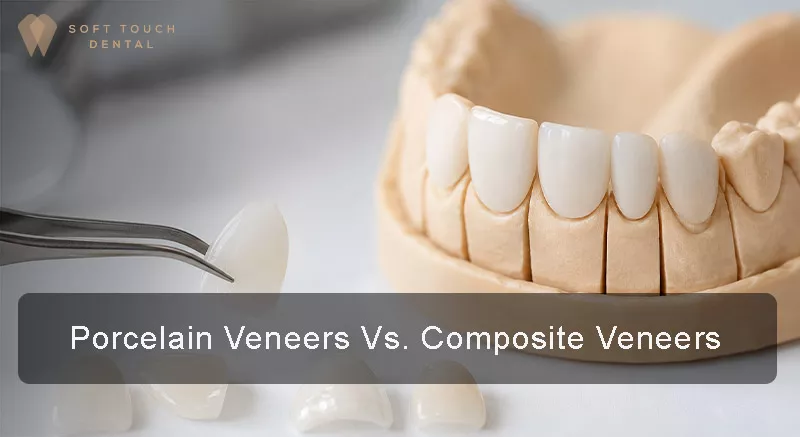
Porcelain veneers vs. composite veneers are two popular cosmetic dentistry options, each with their own unique advantages and disadvantages. Both improve the appearance of teeth, but they differ in material, cost, durability, and treatment time. Porcelain veneers are very thin ceramic shells that are bonded to your teeth. They look very natural and are resistant to stains, and can last 10 to 15 years or more. Composite veneers (direct composite bonding) use a tooth-colored resin that is sculpted in the mouth. They cost much less and can be done in one appointment. Which option is best for you depends on your goals and budget. Below, Soft Touch Dental looks at the key differences, pros and cons, and tips to help you decide.
Porcelain vs. Composite Veneers: Which is Right for You?
There’s no one-size-fits-all answer. The best choice depends on personal factors like how long you want the results to last, how natural they look, and how much you’re willing to invest. In general, porcelain veneers excel in terms of longevity and aesthetics, while composite veneers shine in terms of comfort and cost. For example, porcelain’s ceramic material gives it superior strength and clarity (similar to natural enamel), so it can last a decade or more with proper care. Composite resin is weaker and more porous, so composite veneers need replacing sooner (about 5 to 7 years on average) and are more prone to staining.
The type of veneer that’s right for you is a very personal decision that depends on your aesthetic goals and budget. Porcelain veneers offer durability and a natural appearance, while composite veneers offer speed and affordability.
Overall Comparison of Composite Veneers vs. Porcelain Veneers
Although both porcelain and composite veneers can correct imperfections such as discoloration, chips, and uneven teeth, they differ in how they’re made, how long they last, how they respond to daily wear, and the level of maintenance they require. Exploring these differences side by side makes it easier to identify the treatment that offers the best balance of aesthetics, durability, and value for your individual needs.
By Material and Appearance
Porcelain Veneers: Made of high-quality dental ceramic (feldspathic or lithium-disilicate). These thin shells are made in a lab to match the shape and color of your teeth. Porcelain can be stained to very light colors, and its natural translucency and shine are very similar to tooth enamel. The smooth ceramic surface resists stains from coffee or wine.
Composite Veneers: Made of tooth-colored composite resin, the same material used to fill white teeth. The dentist creates layers of the resin directly onto your teeth and molds it into the desired shape. Composite can match the color of your teeth, but it is less translucent than porcelain, so the result may not be as true to life as porcelain.
In terms of durability
Porcelain Veneers: Porcelain is a very strong material. Numerous studies and dental sources report that porcelain veneers last 10 to 15 years or more. In some cases, with excellent care, they can last over 20 years. The hardness of porcelain gives it a high resistance to wear and tear.
Composite Veneers: Composite resin is not as durable as regular veneers. Most sources estimate an average lifespan of 5 to 7 years, although good care can sometimes extend this to 10 to 12 years. Composites are more prone to chipping or wear, especially if you grind your teeth.
Stain Resistance and Maintenance
Because porcelain is dense and glassy, porcelain veneers resist staining very well. You can still brush and floss as usual and avoid biting very hard foods, but daily coffee/tea will not discolor the porcelain like natural teeth.
In contrast, composite resin is more porous, so composite veneers can stain or become dull over time. Dark beverages (coffee, red wine), smoking, and certain foods can gradually discolor the composite. Patients with composite veneers may need occasional polishing at the dentist and should use a non-abrasive toothpaste. Good oral hygiene (brushing twice a day, flossing) is important for both types, but composite veneers require more care to maintain their fresh appearance.
Porcelain Veneers vs. Composite Bonding Comparison Table
| Feature | Porcelain Veneers | Composite Veneers |
| Material | Made from high-quality dental ceramic (feldspathic or lithium disilicate) and custom-fabricated in a dental laboratory. | Made from tooth-colored composite resin, applied and sculpted directly onto the teeth by the dentist. |
| Appearance | Offers exceptional translucency, shine, and a highly natural look that closely mimics tooth enamel. | Can closely match the natural tooth color but is less translucent, resulting in a slightly less lifelike appearance. |
| Stain Resistance | Highly resistant to stains from coffee, tea, red wine, and other pigmented foods and beverages. | More porous and prone to staining or discoloration over time, especially with frequent exposure to dark-colored drinks or smoking. |
| Durability & Lifespan | Typically lasts 10–15 years or longer, with some cases exceeding 20 years with proper care. | Generally lasts 5–7 years, although excellent oral care may extend its lifespan to 10–12 years. |
| Resistance to Chipping & Wear | Strong and highly resistant to everyday wear and chipping. | More susceptible to chipping, cracking, and wear, particularly in people who grind or clench their teeth. |
| Maintenance | Requires routine brushing, flossing, and avoiding biting very hard objects; usually does not require regular polishing. | Requires good oral hygiene, occasional professional polishing, and the use of non-abrasive toothpaste to maintain its appearance. |
| Best For | Patients seeking the most natural-looking, long-lasting, and stain-resistant cosmetic solution. | Patients looking for a more affordable, minimally invasive, and easily repairable cosmetic treatment. |
Differences between Porcelain and Composite Veneers in Treatment
Porcelain Veneers: Treatment takes at least two visits. First, the dentist prepares the teeth by shaving off a thin layer of enamel (0.3 to 0.5 mm). An impression of the teeth is taken and sent to a dental laboratory to create custom porcelain shells. In the meantime, temporary veneers are placed for the patient. In the next visit, the lab-made veneers are bonded to the teeth.
Composite Veneers: Often called direct bonding, this can be done in one visit. No or very little enamel is removed. The dentist etches the tooth surface, applies a bonding material, and then builds layers of composite resin into the desired shape. This method saves time and money (no lab fees). If you are looking for a quick treatment, composite veneers can often be placed in one appointment.
porcelain veneers vs composite veneers pros and cons
Porcelain Veneers:
- Pros: Very natural appearance (excellent clarity); highly stain-resistant; long-lasting (10-15 year lifespan).
- Cons: More expensive (often twice the cost of composite); requires removal of tooth enamel (permanent tooth replacement); treatment requires multiple visits and a lab process.
Composite Veneers:
- Pros: Lower cost (half the price of porcelain); single-visit procedure; less tooth grinding (often reversible).
- Cons: Less durable (average lifespan 5-7 years); more prone to chipping and wear; can stain or discolor over time.
Conclusion
Porcelain and composite veneers each have their strengths and weaknesses. Porcelain veneers offer the ultimate in beauty and durability, look very natural, and last for many years. Composite veneers (composite bonding) offer fast, cost-effective results with minimal tooth preparation. The better option is the one that matches your priorities: If you want the most lasting, natural-looking results and are willing to invest more, porcelain may be the best option. If you want to fix problems quickly and affordably, composite could be a good choice. Clinics like SOFT TOUCH DENTAL CLINIC take your budget, oral health, and aesthetic goals into consideration to get the right type of Veneers.

FAQs
What is the difference between porcelain veneers and composite veneers?
Porcelain veneers are ceramic shells that are made in a lab and permanently bonded to teeth. Composite veneers (or composite bonding) use a tooth-colored resin that is applied directly to your teeth and shaped. Porcelain offers a more natural look and longer life, while composite is less expensive and can be done in one appointment.
Which is more durable: porcelain or composite veneers?
Porcelain veneers are significantly more durable. Porcelain veneers last between 10 and 15 years. Composite veneers last between 5 and 7 years before needing repair or replacement.
Are porcelain veneers more expensive than composite?
Yes. Porcelain veneers are more expensive due to the lab-made materials. Typical prices for porcelain are around $900 to $2,500 per tooth, compared to $400 to $1,500 for composite. However, the longevity of porcelain means that it may be more cost-effective in the long run.
Do composite veneers stain easily?
Composite resin is more prone to staining. Foods and drinks like coffee, tea, and wine can discolor composite veneers over time. Porcelain veneers are much more stain-resistant. If you choose composite, be prepared for occasional polishing and extra care to maintain their shine.
Can composite veneers be converted to porcelain later?
Yes, you can replace composite veneers with porcelain veneers if you wish. However, this requires dental evaluation and planning.