




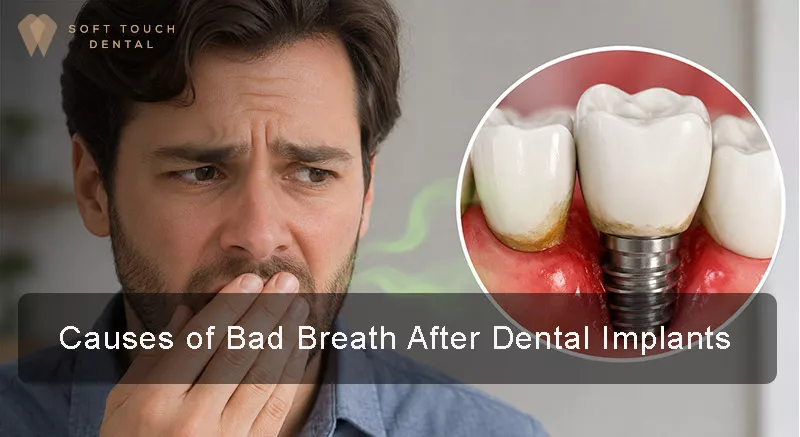
Many people are concerned about bad breath after dental implants. In most cases, the implant itself is not the main cause; rather, factors such as plaque buildup, food debris, dry mouth, or infection around the implant can lead to halitosis (bad breath) after the procedure. In this article, Soft Touch Dental will explain the main causes of bad breath after dental implant surgery and how to prevent or treat it.
What causes bad breath after dental implants?
Bad breath after implants often comes from the environment around the implant rather than the implant itself. Dental implants are made of titanium or zirconia, which do not produce odor. Instead, these common problems cause bad breath:
1. Poor oral hygiene and plaque buildup
If you don’t brush and floss properly around your implants and crowns, plaque and food particles will build up. Bacteria in this food debris release odor-causing gases (volatile sulfur compounds) as they digest food. Over time, the trapped plaque turns into plaque that grows into bacteria that cause odor. Implants can have small gaps in the gum line, so food debris often gets lodged in places that a regular toothbrush can’t reach.
2. Inflammation or infection around the implant
Inflammation of the gum tissue around the implant or infection from bone loss can cause chronic bad breath. Bacterial infection causes pus or bleeding, which has an unpleasant odor. In fact, persistent bad breath is often the first warning sign of peri-implantitis.
Food gets stuck under crowns or between teeth. Ill-fitting implant crowns or bridges can create small gaps where food can easily get stuck. These particles break down and, if not removed, create a strong odor. Even a small piece of food in the implant pocket can cause bacteria to build up and cause chronic bad breath.
3. Loose Implant Parts
Over time, the screw that connects the implant to the crown (the abutment screw) can loosen slightly. When this happens, saliva and food debris get into the gap and become a breeding ground for bacteria. Debris trapped in a loose screw interface, just like any food stuck in it, produces odor-causing compounds.
4. Dry mouth
Saliva is the mouth’s natural cleanser. If saliva flow is reduced (due to medications, anesthesia, dehydration, or mouth breathing after surgery), bacteria can grow and bad breath gets worse. Many implant patients experience temporary dry mouth immediately after surgery, which can give their breath a metallic odor until normal saliva returns. Smoking and some medical conditions also dry out the mouth and exacerbate odor problems.
5. Healing factors (surgery and bone grafting)
In the first few days or weeks after an implant (or bone graft), as the tissues heal, there may be a slight strange taste or odor. Blood clots and surgical materials (such as dissolvable sutures or bone grafting) can cause a metallic or foul odor that goes away as the healing process progresses. However, if this odor persists after the initial healing phase, it may indicate trapped debris or infection at the surgical site.
6, Diet and habits
Eating strong-smelling foods (garlic, onions, curry) or consuming alcohol can change your breath, especially when healing. Smoking is a major factor tobacco worsens dry mouth and allows bacteria to thrive.
7. Underlying health issues
Occasionally, sinus infections, acid reflux, or systemic illnesses can contribute to mouth odor that is noticed after implant surgery. If you have chronic sinus issues or digestive problems, these should be evaluated too, since they can mix with the implant site odor.
How to Prevent and Treat Bad Breath After Implants
Preventing bad breath associated with implants largely depends on maintaining excellent oral hygiene and closely monitoring your implant site. Here are the key steps:
Brush and floss carefully: Clean around your implant crowns at least twice a day with a soft toothbrush. Use a non-abrasive toothpaste to avoid scratching the implant surfaces. Floss daily, using dental floss or interdental brushes to reach under the implant crown and between the teeth.
Clean dentures/bridges: If you have an implant-supported denture or bridge (such as All-on-4), remove it daily and brush underneath it to remove any trapped food.
Use adjuvants: Rinse with an alcohol-free antibacterial mouthwash or warm saltwater solution. Rinsing your mouth with salt water is a simple home remedy after surgery that soothes the tissues and kills bacteria. Gentle gargling with salt water or an antibacterial mouthwash can help soothe the surgical site and reduce bacteria around the implant.
Drink plenty of water: Drink plenty of water, especially after surgery. Hydration increases saliva flow, which naturally cleans your mouth and neutralizes odors. Avoid excessive caffeine, alcohol, and tobacco, which can dry out your mouth.
Follow a bland diet at first: Immediately after implant surgery or bone grafting, stick to bland, unsalted foods (soups, yogurt, mashed vegetables) to prevent food from getting stuck around the implant and help with healing. Avoid sticky, hard, or spicy foods for a few weeks. (For more diet tips, see our guide to “What to Eat After Dental Implant Surgery.”)
Quit Smoking or Cut Back: It is strongly recommended that you avoid smoking around implant surgery. Ask your dentist, when can I smoke after dental implant surgery? but generally, waiting at least a few weeks is best. Smoking can slow down the healing process and worsen bad breath by causing dry mouth and bacteria growth.
Regular dental check-ups: Continue routine cleanings and exams with your dentist or hygienist. Professional cleanings remove stubborn tartar that home care can’t, and your dentist can check for early signs of peri-implantitis or loose implant components. Whether you have a single implant or Full mouth dental implants San Diego, regular follow-up appointments are essential for maintaining healthy implants and preventing complications such as bad breath. If you notice persistent bad breath, a foul taste, redness, bleeding, or pain around the implant, schedule a dental visit as soon as possible.
Treat underlying problems: If tests show periodontal disease, sinus infections, or other conditions, treat those as well. Sometimes gut imbalances or sinusitis can contribute to bad breath, so addressing your overall health can help with your breathing.
When should you worry about bad breath after implants?
A little bit of bad breath right after surgery (a day or two) can be normal as blood is present and tissues are adjusting. However, bad breath should start to improve within a week or two. If you have persistent halitosis for more than the first two weeks or experience any of the following, it could be a sign of infection or peri-implantitis:
- A bad taste or odor that doesn’t go away with brushing.
- Redness, swelling, or bleeding gums around the implant site.
- Pus or discharge from the gums near the implant.
- Pain, tenderness, or a feeling of looseness in the implant or crown.
Conclusion
In most cases, bad breath after dental implants can be prevented or eliminated with proper care. Remember, it’s not the implant itself that causes the odor, but rather issues like bacterial plaque, inflammation, or food trapped around it. By maintaining excellent hygiene (brushing, flossing, rinsing), staying hydrated, and following your dentist’s post-operative instructions, you can keep your breath fresh and your implants healthy.
For specific advice on recovery-related topics (such as what to eat after dental implant surgery), consult Soft Touch Dental. Choosing The Best Dental implants in san diego can also ensure a good fit and support for the implant, which in turn minimizes complications like bad breath.
FAQs
Is bad breath normal after dental implant surgery?
A slight odor is common in the first few days of healing. Blood clots and healing tissue may cause a metallic taste or a slight odor. This odor will go away over time, as long as you practice gentle hygiene. However, if bad breath persists for more than 2 weeks, you should see a dentist.
Do dental implants themselves cause bad breath?
No. The implant fixture (titanium post or crown) is odorless. In fact, the materials used (ceramic or metal) are smooth and resist plaque better than old metal fillings.
How can I get rid of bad breath after dental implants?
The best treatment is to eliminate the source: improve the cleanliness around the implant. Brushing, flossing, and rinsing as described above usually eliminate odor. Salt water or antiseptic mouthwashes help reduce bacteria, and staying hydrated or using sugarless gum can increase saliva.
Does a bone graft cause bad breath?
The bone graft itself does not inherently cause bad breath, but the surgical site can. If waste products accumulate, healing grafts and dissolving sutures can smell bad. A bad taste after a graft is often caused by food debris, plaque, blood products, or even infection in the graft area. Careful rinsing and following post-operative care can help.
When should I see a dentist about bad breath after implants?
Make an appointment if bad breath persists for more than 2 to 3 weeks after surgery or if it is accompanied by pain, swelling, bleeding, or discharge around the implant site.