
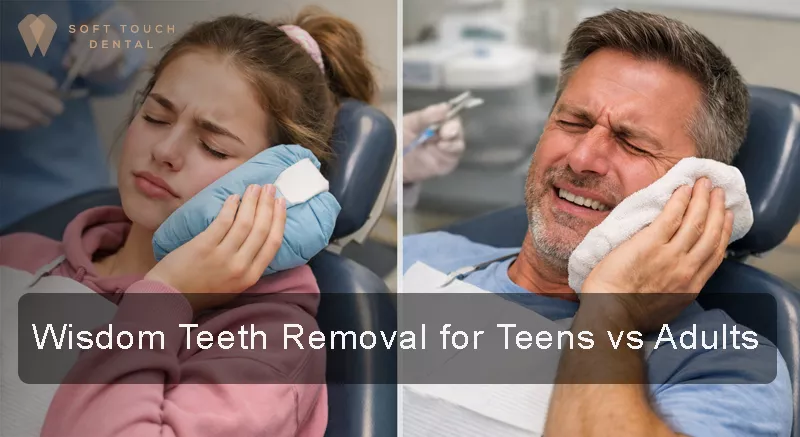
When assessing the need for third molar extraction, clinical timing is a critical factor determining the success and ease of the procedure. While Wisdom Teeth Removal for Teens vs Adults shares the same surgical goal eliminating impacted or problematic teeth the biological realities of the jawbone and tooth development make the two experiences vastly different. For patients scheduling wisdom teeth removal san diego, evaluating how age impacts surgical complexity, healing speed, and complication risks is essential for setting proper clinical expectations.
wisdom teeth removal teens vs adults
| Clinical Factor | Teenage Patients | Adult Patients |
| Root Development | Partially formed, shorter, unanchored | Fully developed, deeply embedded |
| Jawbone Density | Softer and more pliable (simpler extraction) | Highly dense and rigid (invasive extraction) |
| Surgical Intent | Preventative (stops future crowding/decay) | Corrective (treats active pain/shifting) |
| Anesthesia | Often local anesthesia | Often general anesthesia or sedation |
| Recovery Time | Rapid (typically 3 to 4 days) | Slower (a full week or more) |
| Complication Risk | Lower overall clinical risk | Higher risk (dry socket, nerve damage) |
| Logistics | Supervised recovery, utilizes school breaks | Self-managed, requires time off work |
In the following sections, we will explore each of these biological and logistical factors in greater detail to help you understand what to expect during surgery and recovery.
Tooth and Root Development
The physical development of the tooth roots presents the primary clinical difference between an adolescent and an adult patient.
Teen Development
- During the late teenage years, the roots of the wisdom teeth are typically only partially formed. They are shorter, lack a firm anchor in the jawbone, and remain positioned further away from major facial nerves. This allows the oral surgeon to extract the tooth with minimal force.
Adult Development
- By the time a patient reaches their mid-twenties, the roots are fully developed. They are often long, curved, and deeply embedded into the jawbone, sometimes wrapping around the mandibular nerve or extending up into the sinus cavity. Extracting these fully formed teeth requires a much more invasive surgical approach.
Jaw bone density and the complexity of wisdom tooth extraction
Bone density naturally increases as a person ages, directly impacting the mechanics of the surgery.
The Teenage Jaw
- The bone surrounding the third molars in adolescents is softer and more pliable. This porous structure makes it significantly easier to maneuver and remove an impacted tooth without requiring extensive bone drilling.
The Adult Jaw
- Adult jawbones are highly dense and rigid. To remove a fully rooted adult wisdom tooth, the surgeon frequently has to cut away surrounding bone and section (cut into pieces) the tooth itself to safely extract it.
Orthodontic Needs and Smile Alignment
The eruption of third molars intersects directly with previous orthodontic treatments, changing the primary motive for surgery based on age.
Preventative Teen Extraction
- For adolescents who recently completed braces or clear aligner therapy, removing wisdom teeth is a preventative measure to stop erupting molars from pushing anterior teeth out of alignment.
Corrective Adult Extraction
- Adults often experience shifting of previously straightened teeth as wisdom teeth emerge late. Extraction in adulthood is corrective, aimed at stopping further crowding and restoring proper bite mechanics.
Anesthesia Protocols During Wisdom Tooth Extraction
The clinical approach to pain management and surgical safety shifts significantly based on the patient’s age and overall medical history.
Anesthesia Requirements
- For many teenagers, local anesthesia is sufficient for straightforward extractions. Due to the increased surgical complexity and higher rates of dental anxiety, adults often require general anesthesia or conscious sedation.
Pre-existing Medical Conditions
- Adult patients are more likely to present with systemic health issues such as diabetes, cardiovascular disease, or osteoporosis. These conditions require specialized surgical protocols to ensure proper healing and prevent post-operative infections.
Recovery after wisdom tooth surgery
Age directly correlates with metabolic rate and cellular regeneration, making the post-operative healing phase distinct for each group.
| Recovery Factor | Teenage Patients | Adult Patients |
| Healing Timeline | Rapid recovery; most return to normal activities within 3 to 4 days. | Slower recovery; often requires a full week or more of dedicated rest. |
| Gum Tissue Response | High metabolic rate promotes fast tissue closure and minimal inflammation. | Slower cellular regeneration leads to prolonged swelling and tenderness. |
| Surgical Intent | Usually preventative (removing teeth before they cause decay). | Usually corrective (removing teeth causing pain or active infection). |
Post-Wisdom Tooth Extraction Requirements
Beyond biological factors, the timing of tooth extraction involves significant differences in lifestyle and recovery management.
- Compliance and Supervision: Adolescent patients generally benefit from parental supervision, ensuring more strict adherence to post-operative instructions. This includes strict adherence to a diet of the best foods after wisdom tooth surgery to protect the surgical site and prevent blood clotting.
- Scheduling Limitations: Adolescents often use school vacations for a dedicated recovery period without disrupting their studies. Adults face the challenge of taking extended time off from work to manage the longer recovery timeline required for denser bone structures.
Risks of Wisdom Tooth Extraction Complications by Age
Since tooth extractions are inherently more invasive in adults, older patients are statistically at higher risk of clinical complications after the procedure.
- Dry socket: Adults are significantly more prone to dry socket, a painful condition in which the protective blood clot separates from the tooth extraction site.
- Nerve damage: The roots of fully developed adult teeth are often dangerously close to the alveolar nerve. Their extraction carries a higher risk of temporary numbness in the lower lip or chin.
- Sinus communication: In the upper jaw, the roots of fully formed adult teeth can press on the floor of the sinus. Tooth extraction can sometimes create a small opening between the mouth and the sinus cavity.
Expert Guide to Wisdom Tooth Extractions for Adults and Teen
Despite the increased complexity for adults, removing problematic wisdom teeth remains a safe and very common procedure at any age. At Soft Touch Dental, our oral surgeons use advanced 3D imaging to accurately map the location of your tooth roots, nerves, and sinus cavities, tailoring the surgical approach to your biological age and specific anatomy.
Conclusion
Removing wisdom teeth during the teenage years provides a clear clinical advantage due to underdeveloped roots, softer jawbones, and rapid cellular healing. While adult extractions involve fully formed roots and denser bone which increases the complexity of the surgery, alters anesthesia requirements, and extends the recovery timeline the procedure remains a highly effective surgical solution for eliminating dental pain, active infections, and structural crowding.