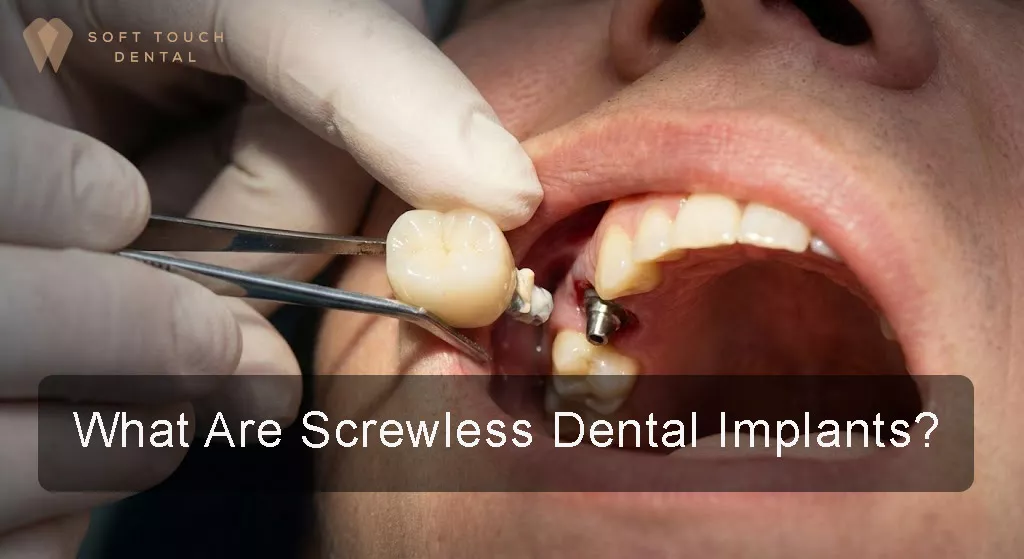
In the world of restorative dentistry, the term “screwless dental implant” typically refers to the method used to attach the visible tooth (crown) to the implant post. While traditional implants often use a tiny screw to hold the tooth in place (sometimes leaving a visible hole) screwless Implants use cement, friction, or locking mechanisms to secure the tooth.
This approach is designed to improve aesthetics and eliminate some of the mechanical problems associated with screws, such as loosening or fractures.
Below is a detailed breakdown of the types, benefits, and drawbacks of screwless dental implants.
How Do screwless Implants Work?
To fully grasp the concept of screwless implants, it is essential to review the dental implants steps and understand the three main parts of it
-
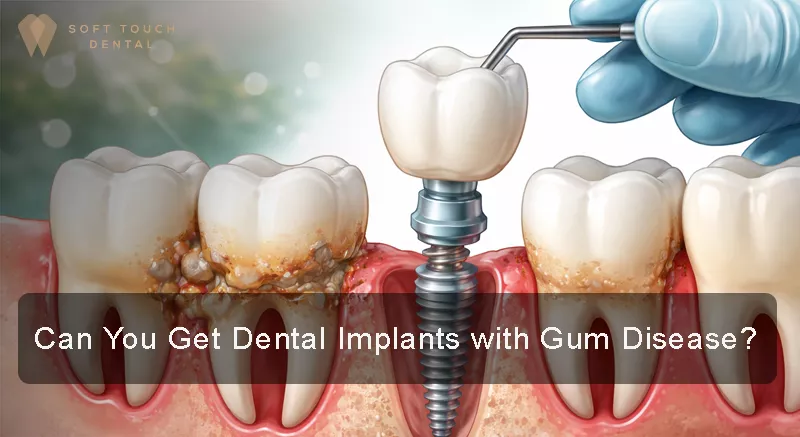
The Fixture: The titanium post inserted into the jawbone (acting as the root).
-
The Abutment: The connector piece that sticks out of the gum.
-
The Crown: The ceramic tooth that you see.
In a traditional screw-retained system, the crown has a small hole in the biting surface. A screw goes through this hole, through the crown, and anchors into the abutment. This hole is then filled with a tooth-colored filling, but it can sometimes be visible or weaken the porcelain.
Screwless Dental Implants eliminate this screw access hole using one of the following methods:
1. Cement-Retained (Most Common)
This is similar to how a crown is placed on a natural tooth. The abutment is screwed into the implant, but the crown is cemented (glued) onto the abutment.
Result: A completely smooth porcelain tooth with no hole.
2. Friction-Fit (Locking Taper)
These are “true” screwless crown. They do not use screws for the crown or the abutment connection. Instead, they rely on a cold-weld or Morse taper connection. The abutment is tapped into the implant shaft, and the friction is so high that the two metal parts essentially fuse together (cold welding) without a screw.
Result: A bacterially sealed connection that never loosens.
3. One-Piece Implants
In this design, the implant and the abutment are manufactured as a single solid piece of titanium or zirconia. There is no joint to screw together.
Result: Extremely strong, but requires perfect surgical placement since the angle cannot be corrected later.
Advantages of Screwless Implant
A. Superior Aesthetics
The biggest selling point is the appearance. Because there is no screw access hole on the top of the crown, the tooth looks exactly like a natural tooth. This is critical for front teeth where a screw hole might be visible or unsightly.
B. Better Porcelain Integrity
A screw-retained crown essentially has a tunnel drilled through it. This can sometimes make the porcelain prone to chipping. Screwless crowns are solid porcelain, potentially offering better structural integrity.
C. Microbial Seal (Friction-Fit Systems)
In screw-based systems, there is often a microscopic gap between the implant and the abutment (the “microgap”). Bacteria can pump in and out of this gap, causing bone loss or bad smells. True screwless friction-fit systems (like Bicon) seal this gap almost perfectly, preventing bacterial leakage.
D. No “Loosening” Screws
A common complication with traditional implants is that the tiny internal screw can loosen over time from chewing forces. Screwless friction-fit implants physically cannot unscrew because there is no screw to begin with.
Disadvantages and Risks
A. The “Cementitis” Risk (Cement-Retained)
For cement-retained implants, the biggest risk is excess cement. If the dentist uses too much glue, it can squeeze out below the gum line where it cannot be seen or cleaned. This hardened cement can irritate the bone and cause peri-implantitis (infection), leading to implant failure. Friction-fit systems do not have this issue as they don’t rely on cement.
B. Difficulty of Removal
If a porcelain chip occurs or the gum recedes, a dentist might need to remove the crown to fix it.
-
Screw-retained: The dentist simply drills out the filling, unscrews the crown, fixes it, and screws it back on.
-
Screwless: Removing a cemented or friction-locked crown is difficult. Often, the crown must be cut off and destroyed to access the implant, requiring a brand-new crown to be made.
C. Initial Stability
Some one-piece or press-fit surgical implants may have lower initial stability compared to threaded screws, meaning you might have to wait longer before you can chew on them.
Comparison Table
| Feature | Screw-Retained (Traditional) | Screwless (Cemented) | Screwless (Friction-Fit / Bicon) |
| Aesthetics | Good (but may show access hole) | Excellent (No hole) | Excellent (No hole) |
| Retrievability | High (Easy to unscrew/fix) | Low (Must cut off crown) | Moderate (Can be tapped out) |
| Infection Risk | Low (if microgap is managed) | Medium (Risk of excess cement) | Very Low (Bacterial seal) |
| Screw Loosening | Possible | Possible (abutment screw) | Impossible (No screw) |
| Best For | Back teeth (Molars) | Front teeth (Smile zone) | Short bone height / All areas |
Conclusion: Are They Right for You?
Screwless dental implants are an excellent choice if your priority is aesthetics, particularly for the front teeth (the “smile zone”). They offer a seamless, natural look that is difficult to achieve with screw-retained versions.
However, for back teeth or full-arch restorations like all on 4 dental implants, dentists usually recommend the screw-retained type for added strength and retrievability.
Since these teeth take a lot of pressure, this option makes it easier for the dentist to repair or tighten the tooth in the future. To find out which system is best for your specific case, we recommend consulting an experienced dentist in san diego.