
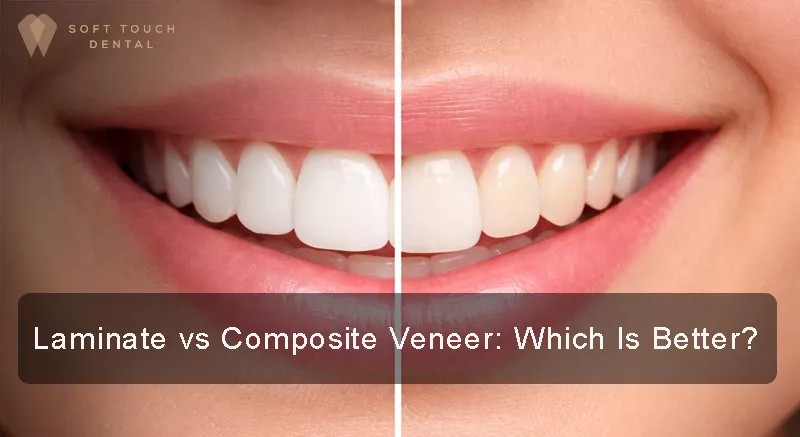
A beautiful smile is one of the most desired aesthetic goals, and laminate and composite veneers are two popular methods for improving the shape and color of teeth. In this article, we compare laminate vs composite to help you understand the pros and cons of each so you can choose the best option. Both methods are widely used and offer different costs and results. Below, we explore differences in materials, treatment steps, durability, and aftercare.
Difference Between Laminate and Composite
Treatment process: Composite veneers are usually applied in a single visit with minimal tooth reduction, while porcelain laminates require impressions and lab fabrication, often taking two or more appointments.
Longevity: Porcelain laminates are highly durable and typically last 10–15 years, whereas composite veneers last about 5–8 years.
Appearance: Laminates look more natural, glossy, and stain-resistant. Composite veneers can look beautiful at first but may stain and lose shine over time.
Repair: Composite veneers can be repaired easily if chipped, while broken laminates usually need full replacement. Laminates also require less maintenance and resist staining better, whereas composites are more sensitive to colored drinks and pressure.
For patients seeking Veneers San Diego, CA, distinguishing between these materials is the first step in planning a successful cosmetic transformation.
Materials and Structure
Porcelain laminates are made from ultra-thin ceramic shells fabricated in a dental laboratory. Although thin, they are strong and have excellent light transmission, reflecting light similarly to natural enamel and creating a very lifelike appearance.
Composite veneers, on the other hand, are made from dental resin and are sculpted directly onto the teeth by the dentist. They are moldable and removable, meaning they can be adjusted or replaced if necessary.
Overall, porcelain laminates provide a more natural look and better stain resistance but require more preparation. Composite veneers are more affordable and flexible (reversible), yet they tend to wear down and discolor sooner.
Preparation and Placement Process
The preparation steps differ significantly between laminates and composites. For porcelain laminates, the dentist must slightly reshape the enamel surface to make room for the ceramic shell. This enamel removal is irreversible and is usually done under local anesthesia. Afterward, impressions are taken and sent to a lab where custom laminates are made. They are then bonded to the teeth during a later visit. The entire process can take several weeks.
Composite veneers, however, are created and applied directly in the clinic during the same visit. Tooth reduction is minimal, which helps preserve natural tooth structure. After lightly preparing the surface, the dentist layers composite resin onto the tooth and hardens it with a special curing light. As a result, composite veneers are completed faster and require fewer appointments.
Aesthetics and Natural Appearance
One of the most important decision factors is the final look. Porcelain laminates offer superior translucency and gloss, producing highly natural results. Their color closely resembles natural enamel, which is why they are often used for Hollywood smile makeovers. They also resist staining and maintain their color for years.
Composite veneers may initially appear bright and attractive, but over time they can discolor and become dull due to wear and exposure to staining substances. Their translucency and refinement are usually less than porcelain laminates, and they are more prone to staining especially from coffee, tea, and pigmented foods. If achieving the most natural and luminous appearance is your priority, laminates are typically the better choice.
Durability and Lifespan
Porcelain laminates generally last longer. The ceramic materials used are strong and resilient, giving them a lifespan of about 10–15 years. Composite veneers typically last around 5–8 years. While improvements in composite materials have increased their durability, laminates remain tougher and more resistant overall.
Composite veneers may chip or wear down sooner, though proper care can extend their life. Laminates, meanwhile, are more resistant to discoloration and decay and therefore need replacement less often.
Cost and Budget Considerations
Budget is an important factor when choosing between these treatments. Composite veneers are traditionally less expensive than porcelain laminates. Because laminates require lab fabrication and higher-cost materials, their total price is usually more than double that of composites.
However, from a long-term perspective, maintenance and earlier replacement of composites may increase their overall cost. While budget plays a major role in decision-making, laminates often provide better value over time due to their superior durability, aesthetics, and longevity.
Care and Maintenance
Proper aftercare helps extend the life of any veneer. Porcelain laminates do not require special maintenance because their surface is smooth, strong, and stain-resistant. Regular brushing, flossing, and routine dental checkups are usually enough to keep them looking great.
Composite veneers require more attention. They are more sensitive to staining substances like coffee, tea, and tobacco, which can gradually discolor them. Because resin materials respond more to temperature changes, they may also be more vulnerable to damage from very hot or cold drinks. Patients with composite veneers should limit very hard or acidic foods and schedule regular dental visits for monitoring and touch-ups.
Comparison Table Between Laminate & Composite
| Feature | Composite Veneers | Porcelain Laminates |
| Material | Resin (Plastic/Glass mixture) sculpted directly on the tooth. | Medical-grade Ceramic crafted in a lab. |
| Durability | Medium: Lasts 5–7 years. Prone to chipping but easily repaired. | High: Lasts 10–15+ years. Very strong but difficult to repair if broken. |
| Stain Resistance | Low: Porous material can stain over time (like natural teeth) from coffee, tea, or smoking. | Excellent: Glazed surface is highly resistant to staining and stays bright. |
| Cost | Lower: Generally half the price of porcelain. | Higher: Requires lab fees and creates a longer-lasting result. |
| Reversibility | High: Often requires little to no enamel removal, making it reversible. | None: Requires enamel removal (0.5mm), making it a permanent commitment. |
| Treatment Time | 1 Visit: Completed in a single appointment (same-day smile). | 2 Visits: Requires an impression and a temporary phase while the lab creates the veneers. |
At Soft Touch Dental, we approach smile design with a blend of art and science. Whether you choose the immediate transformation of composite or the enduring brilliance of porcelain, we ensure the result complements your facial features and functions perfectly with your bite.
Veneers or Composite: Which One Should You Choose
The better choice depends on your specific goals. Here is a quick guide to help you decide based on your dental condition:
Choose Composite Veneers If:
- You Have Minor Imperfections: Excellent for fixing small chips, slight gaps, or shaping a single tooth.
- You Want Immediate Results: You can walk in with a chipped tooth and walk out with a full smile in one afternoon.
- Budget Is a Priority: They offer a significant aesthetic improvement at a lower entry cost.
- You Want to Preserve Enamel: ideal for younger patients or those hesitant to alter their natural tooth structure permanently.
Choose Porcelain Laminates If:
- You Have Significant Discoloration: If whitening hasn’t worked, porcelain can mask deep, intrinsic stains that resin cannot hide.
- You Want a Hollywood Smile: For a complete smile makeover that looks uniform, bright, and translucent, porcelain is the superior choice.
- You Want Low Maintenance: They resist staining and maintain their gloss for over a decade with standard care.
- You Have Spacing/Alignment Issues: Porcelain is stronger and better suited for closing larger gaps or correcting the appearance of slightly crooked teeth.
When considering different Dental Veneer Applications, your specific dental issues like severe deep staining versus minor edge chipping will dictate the best choice. While composites are fantastic for touch-ups, laminates are the superior choice for comprehensive transformations.
Conclusion
Both porcelain laminates and composite veneers are effective solutions for improving your smile, but they differ in materials, longevity, cost, and maintenance. If you want the most natural-looking, durable result and are comfortable with a higher investment, porcelain laminates are usually the better choice. If you prefer a quicker, more affordable treatment, composite veneers may be ideal.