
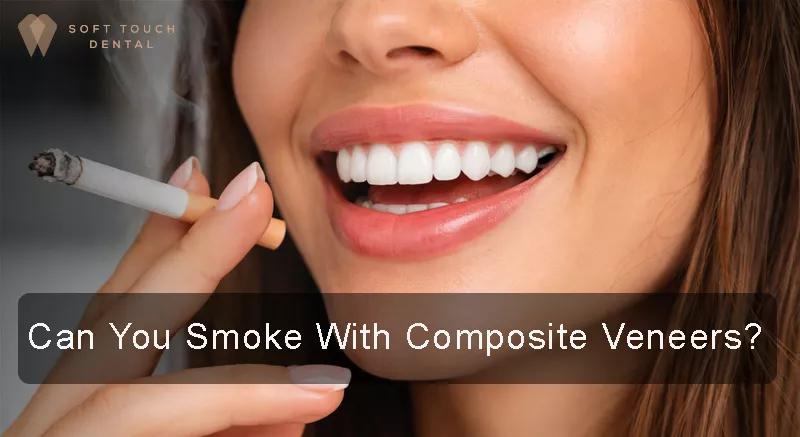
Yes, you can physically smoke after receiving cosmetic dental treatments, but doing so will rapidly degrade both the appearance and the structural integrity of the resin. Cigarette smoke contains tar and nicotine, which aggressively stain the porous materials used to build and bond the restorations.
At Soft touch dental we advise our patients that while this treatment effectively masks underlying dental imperfections, smoking directly counteracts these clinical results. Tobacco use not only severely discolors the material but also introduces thermal and chemical damage that compromises the overall restoration.
How Tobacco Smoke Damages Composite Resin
Exposure to tobacco smoke introduces specific chemical and thermal challenges to the composite material that natural enamel can normally resist.
Surface Discoloration
Composite resin is inherently more porous than natural teeth or porcelain. It quickly absorbs the yellow and brown pigments from nicotine and tar, leading to heavy, uneven staining across the smile.
Loss of Polish
The heat generated by cigarettes and cigars degrades the smooth, polished surface of the veneer. This continuous thermal exposure creates a rough, matte texture that traps even more bacterial plaque and pigment.
Weakened Bonding
Smoking dries out the oral cavity and alters the chemical environment of the mouth. This lack of saliva and increased acidity gradually weaken the dental adhesive holding the veneer to the natural tooth structure, leading to marginal leakage.
Can You Vape With Veneers?
Many patients switch to electronic cigarettes and ask, can you vape with veneers? While vaping eliminates the heavy tar found in traditional combustible cigarettes, it still poses direct clinical risks to composite restorations:
- Reduced Saliva Production: Vaping liquids contain chemical flavorings and heat that severely dry the oral cavity.
- Accelerated Plaque Buildup: A dry mouth allows artificial pigments to settle deeper into the composite pores, eventually dulling the material.
- Gum Inflammation: The lack of saliva increases the risk of bacterial buildup and periodontal issues around the veneer margins.
The Direct Impact on Veneer Lifespan
The chemical and physical wear from continuous smoking directly reduces the standard veneer lifespan. While a well-maintained composite restoration can last 5 to 7 years in a healthy oral environment, a heavy smoker will experience edge breakdown, severe surface staining, and bond failure much earlier.
The continuous exposure to heat causes micro-expansion and contraction in the resin, leading to microscopic structural cracks. Consequently, patients who smoke require much more frequent professional polishing, minor margin repairs, and premature replacement of the entire restoration.
Clinical Maintenance for Smokers
If you choose to Smoke With Veneers, strict clinical maintenance is mandatory to delay the inevitable degradation of the resin. When patients ask can you smoke with composite veneers and still maintain a white aesthetic, the answer relies entirely on elevated, high-frequency oral hygiene protocols.
| Maintenance Factor | Standard Patient Protocol | Protocol for Smokers |
| Professional Polishing | Every 6 months | Every 3 to 4 months to remove embedded tar buildup |
| Post-Habit Routine | Standard daily water intake | Immediate water rinsing after every cigarette or vaping session |
| Brushing Technique | Twice daily with standard paste | Twice daily with non-abrasive paste to protect the weakened surface polish |
| Periodontal Monitoring | Routine annual checks | High-frequency clinical checks to prevent smoking-induced gum recession |
The Long-Term Commitment to Veneers
Because the placement process requires shaving down a thin layer of the natural tooth enamel, patients often ask, Are Veneers Permanent? The physical alteration to your natural tooth is completely irreversible, meaning the prepared tooth will always require a prosthetic cover to function and prevent decay.
However, the composite material itself is not permanent and will eventually require replacement. For patients receiving Veneers san diego, failing to quit smoking guarantees that these surgical replacements will be needed much more frequently due to the rapid, unavoidable deterioration of both the composite resin and the surrounding gum tissue.
Conclusion
Smoking with composite veneers causes rapid discoloration, surface degradation, and the structural weakening of the bonding agent. The porous nature of the composite resin makes it highly susceptible to tar and nicotine stains, while the heat from smoking induces microscopic cracks. Preserving the structural integrity and aesthetic value of these dental restorations requires either complete smoking cessation or a strict, high-frequency clinical maintenance routine to mitigate the chemical damage.