For individuals suffering from extensive tooth loss or the frustration of loose dentures, the All-on-4 treatment concept has become a preferred solution. It offers the stability of a fixed bridge without the need for an implant for every single missing tooth.
However, because this is a surgical procedure that permanently alters your oral anatomy, it requires specific biological conditions to be successful. One of the most common questions patients ask during their initial research is: “Am I candidate for All on 4 implants, or should I consider other options?”
To give you a complete answer, we must look beyond just the missing teeth and evaluate your bone structure, medical history, and overall oral health.
The Ideal Candidate Profile
The All-on-4 system is not a “one-size-fits-all” procedure, but it is designed to be inclusive for many patients who cannot undergo traditional implant surgery.
Generally, you are considered a prime candidate if you fit into these categories:
- You have lost all teeth in either the upper or lower arch (or both).
- Your remaining teeth are failing due to severe decay or gum disease and cannot be saved.
- You currently wear traditional dentures but struggle with slipping, clicking, or difficulty chewing hard foods.
- You want a permanent, non-removable solution that functions like natural teeth.
- You have adequate general health to support the healing process after minor surgery.
Understanding Bone Density Requirements
Bone loss is often a major barrier to traditional implants. When teeth are missing for years, the jawbone shrinks, historically requiring painful and expensive bone grafting surgeries.
The All-on-4 technique solves this through smart engineering. For patients seeking All on 4 Dental Implants san diego, the difference lies in the specific placement:
- Strategic Angulation: The two back implants are tilted at a 45-degree angle.
- Maximized Contact: This tilt allows the implants to anchor into better-quality bone in the front of the jaw.
- No Grafting: This often allows us to bypass the need for bone grafting completely.
During your evaluation, we assess your specific bone volume to answer the question, “Am I candidate for All on 4 without additional procedures?” While rare, patients with extreme bone atrophy might still require minor grafting to ensure a solid foundation.
Does Age Matter?
A common myth is that older patients are not eligible for dental implants. The reality is that age is rarely a disqualifying factor. We have successfully treated patients in their 80s who healed just as well as younger patients.
The determining factor is not your chronological age, but your medical age—meaning your body’s ability to heal. If you are healthy enough to undergo a routine tooth extraction, you are likely healthy enough for the All-on-4 procedure.
Health Conditions and Lifestyle Factors
While the All-on-4 procedure is less invasive than traditional methods, your body’s ability to heal is the most critical factor for success. Certain medical conditions or lifestyle habits can interfere with osseointegration—the biological process where your jawbone fuses with the titanium implant posts and are often the primary causes of implant rejection.
We will need to review your medical history carefully if any of the following apply to you:
Heavy Smoking
This is one of the most significant risk factors. Nicotine restricts blood flow to the gums and bone, which can slow down healing and increase the risk of implant failure. We strongly advise patients to quit or significantly reduce smoking prior to surgery.
Read more: When Can I Smoke After Dental Implant Surgery?
Uncontrolled Diabetes
High blood sugar levels can impair your immune system and your body’s ability to recover from surgery. However, if your diabetes is managed and controlled, you can still be a successful candidate.
Autoimmune Disorders
Conditions that affect the immune system may complicate healing. In these cases, we often work with your general physician to determine if surgery is safe.
Medications
Certain drugs, particularly bisphosphonates used for bone density, can impact bone healing. It is vital to provide a full list of medications during your consultation.
The Importance of Gum Health
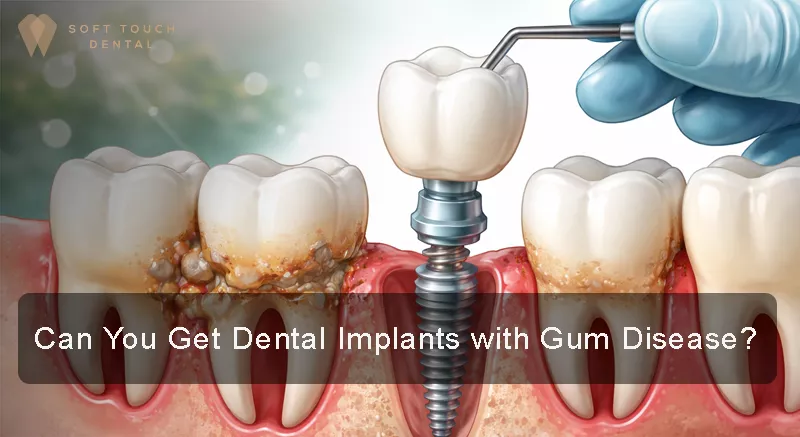
Before we can rebuild your smile, we must ensure the foundation is healthy. Active periodontal disease (gum disease) is a leading cause of tooth loss and can also threaten the success of new implants.
If you have active gum infection, you are not immediately a candidate. However, this is usually a temporary obstacle. At Soft Touch Dental, we can implement a treatment plan to eliminate the infection and stabilize your gums, clearing the path for your implant surgery.
Precision Diagnostics – We Don’t Guess
One area where many competitors differ is in their diagnostic approach. Answering the question “Am I candidate for All on 4” requires more than a visual look inside the mouth. We utilize advanced 3D Cone Beam CT scans to create a precise digital map of your jaw.
This technology allows us to:
- Measure exact bone volume and density.
- Locate nerves and sinus cavities to avoid complications.
- Plan the precise angle of the implants before the surgery begins.
This data-driven approach ensures that we can provide accurate answers. If you have been told “no” by another dentist without a 3D scan, it is worth getting a second opinion with us.
What If I Am Not a Candidate?
If our evaluation determines that All-on-4 is not the right fit for you—perhaps due to severe bone loss that even angled implants cannot resolve, or specific medical contraindications—you still have options. We never leave a patient without a solution.
Alternative treatments may include:
- All-on-6 Dental Implants: A variation of full mouth dental implants that uses six implants instead of four to provide maximum stability. This option helps distribute biting pressure more evenly and is often recommended for patients with softer bone density to ensure a stronger, more secure foundation.
- Implant-Supported Overdentures: These are removable dentures that snap securely onto as few as two implants. They offer much better stability than regular dentures and are often more affordable.
- Traditional Bridges: If you still have strong, healthy teeth remaining, a fixed bridge might be a non-surgical alternative to restore function.
- Custom Dentures: Modern high-quality dentures fit far better than those from decades ago and can be an interim solution while health conditions improve.
Conclusion
Choosing to restore your smile is a life-changing decision. Whether you are ready to proceed or simply have more questions about the process, the only way to know for sure is through a professional consultation.
If you are looking for the most experienced providers, our team is here to guide you through every step of the journey, from the initial scan to the final reveal of your new smile. We invite you to schedule your appointment today and discover if this transformative procedure is the right choice for you.