
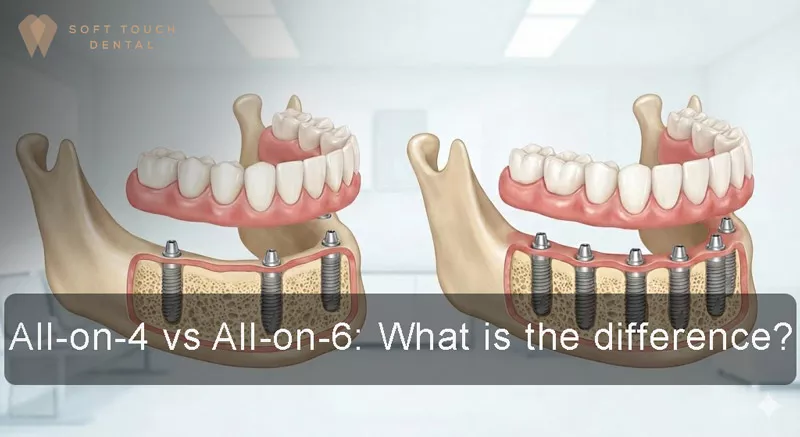
What is the difference between All-on-4 and All-on-6? Both are full-arch dental implant options (sometimes called implant-supported dentures) that replace a whole row of missing teeth with a fixed bridge. All on 4 Dental Implants uses four implants to anchor a permanent arch, while All-on-6 uses six implants for extra support. In general, All-on-4 is less invasive (often avoiding bone grafts) and costs less, whereas All-on-6 provides greater stability and may be recommended for stronger jawbones. Below we break down the key differences in implant count, jawbone requirements, cost, durability, and ideal candidates for each option.
Core Differences at a Glance
All-on-4 uses four implants to secure a full-arch bridge, while All-on-6 uses six. The extra implants of All-on-6 spread chewing forces more evenly across the jaw. All-on-4 often avoids bone grafting by using angled back implants, whereas All-on-6 generally needs a stronger jawbone (and sometimes grafts) to hold the extra posts. All-on-4 is typically the less expensive choice. In short, All-on-4 = fewer implants, shorter surgery, lower cost; All-on-6 = more implants, added stability, higher cost.
Implant Number and Placement
All-on-4 uses four implants per arch. Typically two are placed vertically in the front of the jaw and two are tilted back to use available bone. All-on-6 uses six implants, spaced more evenly across the arch. This means All-on-4 can often work with less bone (by using dense front bone), while All-on-6’s additional two implants create a sturdier base if enough bone is present. In practice, patients with a moderate jawbone may qualify for All-on-4’s tilted approach, while All-on-6 patients need enough bone to support all six posts.
Bone Support and Grafting
Bone quantity and quality are critical. All-on-4 was designed for cases with some bone loss: the angled back implants tap into denser bone, often avoiding extra grafting. All-on-6 requires more jawbone since it adds two implants. If your bone is thin, a dentist may recommend a bone graft before All-on-6 to ensure stability. In short, if you lack bone volume, All-on-4’s angled design can save time and cost. If bone is strong, All-on-6’s extra anchors spread the load, reducing stress on any single implant.
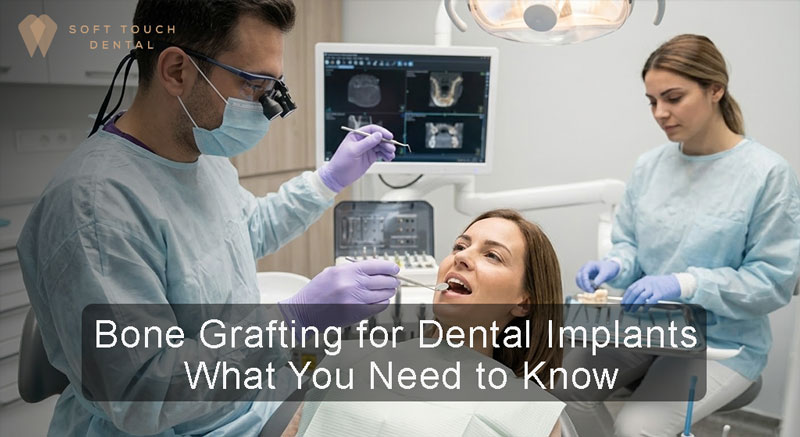
Dentists often use 3D scans and imaging (as shown above) to evaluate jawbone health before choosing a treatment. With All-on-4, two implants go in the front (vertical) and two angled in the back, using the existing bone well. All-on-6’s six implants (all roughly vertical) need a wider bone platform. If scans show low bone height or density, your dentist might favor All-on-4 (to skip grafts); if bone is ample, All-on-6 can give extra support.
Stability, Durability, and Bite Force
The additional implants of All-on-6 increase stability. By spreading bite forces over six points, All-on-6 makes chewing feel more natural and balanced. For example, biting tough foods exerts less pressure on each implant, potentially preserving bone health. All-on-4 still provides a strong fixed bite, but the force is concentrated on four posts, which some dentists caution may slightly limit extreme bite force. In terms of longevity, both systems are very durable: with proper care they can last many years or decades. Experts note the All-on-6 design may “offer extra durability” over time by reducing load on each implant, but All-on-4 remains “reliable” when bone support is adequate.
Cost and Treatment Time
Cost differences are significant. All-on-4 is usually less expensive upfront. Estimates suggest All-on-4 costs about $15,000–$25,000 per arch, whereas All-on-6 is higher (roughly $20,000–$30,000 per arch). That’s because six implants (and sometimes grafting) add fees. The Strull Oral Surgery guide notes “All-on-4 tends to be more affordable” while All-on-6 “involve[s] additional materials and surgical procedures”.
Treatment time also differs slightly. Placing four implants usually requires a shorter surgery, so patients often get a same-day temporary bridge. All-on-6 surgery is more complex and can take longer, potentially extending recovery time. Most people recover in weeks, but some reports say All-on-4 patients resume normal eating slightly faster. Over the long term, All-on-6’s extra strength might reduce future fixes, possibly balancing initial costs.
Aesthetics and Comfort
Visually and functionally, both options are similar. The final prosthetic arch (often zirconia or ceramic) looks like natural teeth in either system. Patients typically cannot tell the difference by appearance – both “blend seamlessly with your smile”. Comfort is also comparable: the teeth feel like real teeth once healed. Some patients feel All-on-6 is a bit “tighter” since it has more support, but most people adapt quickly. Importantly, unlike bulky dentures, both All-on-4 and All-on-6 give a sleek, fixed bridge that you clean like normal teeth. In short, neither option compromises on looks; the difference is under the gums.
Who Are All-on-4 and All-on-6 Suitable For?
Choosing between them comes down to individual needs. All-on-4 is ideal for patients with moderate bone density or those who want to avoid grafts. It’s also a good pick if budget or shorter surgery time is a concern. For example, a patient who lost bone in the back jaw might get an All-on-4 to use the angled front bone. By contrast, All-on-6 suits patients with healthy, strong bone and a high bite force. It’s often recommended for long jaws or heavy chewers, since two extra implants “help stabilize the hybrid prosthesis” and prevent breakage. In practice, your dentist will evaluate your jaw via 3D scans: if your bone has thinned, All-on-4 may be favored; if your bone is thick and you want maximum durability, All-on-6 could be advised. Both options require good oral hygiene and regular check-ups for long-term success.
Conclusion
In summary, what is the difference between All-on-4 and All-on-6 comes down to the number of implants used, overall stability, bone requirements, and cost. Both options are effective full-arch dental implant solutions, and choosing the right one depends on your individual condition and expectations. For a personalized evaluation and expert guidance, consulting with Soft Touch Dental can help you choose the most suitable option between All-on-4 and All-on-6 based on your specific needs.
FAQ
1.Which is better, All-on-4 or All-on-6?
Neither is universally better – each has pros and cons. All-on-4 may be best if you need a quick, less invasive solution or have limited bone. All-on-6 may be better if you have a strong jaw and want extra stability. Your oral surgeon will weigh factors like bone density, cost, and chewing habits to decide what fits your case.
2. Are All-on-4 and All-on-6 removable like dentures?
No. Both systems provide a fixed, permanent bridge that you cannot remove daily. They are cemented or screwed onto the implants, so they function like real teeth. This is one big advantage over traditional removable dentures – you clean them by brushing and flossing, just as you would natural teeth.
3. Is All-on-4 cheaper than All-on-6?
Yes. All-on-4 generally costs less because it uses fewer implants and often avoids extra bone grafts. By contrast, All-on-6 involves two more implants, which adds to the surgeon’s time and material costs. For example, one estimate puts All-on-4 around $15k–$25k per arch, vs. $20k–$30k for All-on-6 (actual prices vary by clinic and region).
4. How long do these implants last?
Both All-on-4 and All-on-6 are long-lasting solutions. With proper care (good hygiene and regular dental visits), they can last for decades. Many experts cite success rates above 95%. All-on-6 may have a slight edge in longevity because the extra implants spread stress, but All-on-4 remains very reliable when your bone is healthy.
5. Is recovery faster with All-on-4?
Often, yes. All-on-4 surgery is less extensive, so healing tends to be quicker. Most patients resume normal soft eating within a few weeks. All-on-6 patients may need a bit more recovery time due to the extra implant sites, but the difference is usually small. In both cases, you’ll have temporary teeth during healing, and your dentist will guide you on diet and care during recovery.